Cyclone Kits
Table of Contents
(click on topic to go there)- Announcement
- Background
- Offerings
- Cyclone Kit
- Blower Housing
- Motors
- Impellers
- Miscellaneous
- Availability
- Delivery
- Shipping
- Shipping Damage
- Orders and Payment
- Support
- Important Announcement!
Clear Vue Cyclones resumed operation to provide clear cyclones that let you see as they separate far better than any other small shop cyclone. As thousands know from using my cyclone design its excellent separation permits using the medical expert recommended fine filters without the constant cleaning that rapidly ruins expensive filters. I am most pleased to share that Ed Morgano and his son Matt will work closely with the new owners to immediately resume production while they train the new staff. I will continue to work with them to provide whatever help I can. I am most supportive of this sale and look forward to a long great relationship as we had with Ed Morgano as we continue to improve these products and keep them affordable.
- Background
Most small shops create dangerously unhealthy amounts of fine airborne dust. Airborne dust poses immediate and long term risks. Most dust contains chemicals that cause immediate problems such as irritation, allergies, toxic reactions, and increased cancer risk. Also, these fine airborne dust particles have very sharp barbed edges that irritate our respiratory tissues. The peer reviewed medical research clearly shows every exposure to fine airborne dust particles that are invisible without magnification causes a measurable loss in respiratory capacity. Worse, because of the damage and scaring these particle create, some of this capacity loss becomes permanent. The health insurance data clearly show that fine dust exposure causes most woodworkers to develop serious respiratory problems that often adversely impact our quality of life and worsen age related health problems. Fine invisible dust particles cause so much harm that the EPA indoor air quality standard fails a large two-car garage sized shop if just two tiny thimblefuls of fine dust become airborne.
Most small shop activities including woodworking make dangerously high amounts of fine invisible dust. Woodworking creates about five pounds of airborne dust out of every one hundred pounds of sawdust and roughly a third of airborne wood dust consists of the fine invisible particles known to cause the most long term damage. Medical experts recommend always amply protecting yourself from this dust, but most of the protections we buy work poorly.
Air engineers have known for decades exactly what we need for good fine dust collection. For collection we need tools modified with hoods that control and capture the fine dust, ample airflow to collect the fine dust, and then to either vent the fine dust outside or use ample filters. The vendors who guarantee customer air quality share their tables that show exactly how much air we need to move at each type and size machine. These tables clearly show it takes about three times more air to pull in the fine dust as it does to collect the sawdust and chips. Most traditional tool designs have such poor dust collection built in we must move huge amounts of air to build a big bubble of air around out tools that moves fast enough to pull in the fine dust as it is made before normal room air currents can dissipate that dust. The medical experts and air engineers recommend use of ASHRAE indoor filters rated at least as 99.9% on particles sized 0.5-microns or smaller. Woodworking creates so much dust filter makers recommend using at least one square foot of this expensive filter area for every two cubic feet of air moved. Woodworking makes so much dust that fine filters need constant cleaning and cleaning rapidly wears out these fine filters. Most commercial firms must replace their expensive filters every two to three months. Between the need for constant cleaning and high cost for filter replacement most commercial firms choose to vent outside. They find it more expensive to replace filters than to provide additional shop heating even in the coldest weather.
Also air engineers have known for decades exactly what we need for good fine dust control. Woodworking makes about 1.6 pounds of fine invisible airborne dust out of every one hundred pounds of sawdust. Many different hand and power tool operations launch fine invisible dust in spite of our best collection efforts. We make this unhealthiest invisible dust by the pound but just two tiny thimblefuls launched airborne causes a large two-car garage sized shop to fail an air quality test. Wood dust also takes years to break down and dissipate so if we let this dust build just about any activity stirs this residual dust back airborne. Rather than have their customers fail air quality tests, those dust collection firms who guarantee customer air quality also equip their customer shops with strong exhaust fans to keep this residual dust from building.
Our small shop vendors have almost no oversight except what we exercise by making informed purchase decisions. Today’s reasonably priced air quality monitors show that even when not actively making fine dust those who vent their dust collection inside get dangerously high fine dust exposures in clean looking shops even when we are not making fine dust. Our small shop vendors are to blame because they ignore industry standards and choose not to engineer their dust collection equipment. Almost all simply make smaller copies of outdoor industrial dust collectors and cyclones then supply them with the same outdoor filters designed to pass the fine invisible dust that dissipates outdoors. When used indoors these units create such a big fire danger that fire marshals immediately fail shops with uncertified indoor dust collectors or cyclones. Worse, our small shop vendors then play games pretending that these units provide good health protection when they are actually nothing more than fine dust pumps. Only about one in seven develops allergic reactions and only about seven out of a thousand develop such bad immediate problems that until we got the Internet this fine dust problem got ignored. The Internet increased communication shared how big this problem really is and began exposing this vendor foolishness.
Rather than pay for the engineering to make repair, our small shop vendors went on a disinformation campaign with patchwork solutions that make the problem even worse. They all still sell typical dust collectors and cyclones with about one third the airflow we know it takes for good fine dust collection. Rather than increase the airflow which means their products cost more, our small shop vendors started selling finer filters. Without the increased airflow much of the fine dust is missed as it is made. Our small shop vendors decided that these fine filters the experts recommend cost too much plus their crude dust collectors and cyclones constantly clog these fine filters making for a cleaning nightmare and frequent expensive filter replacement. These vendors again did their normal advertising lies quoting filtering levels on already plugged filters yet claim airflows based on new clean filters or on units without their filters even attached. The reality is with fine enough filters these traditional dust collectors and cyclones get so plugged they no longer even do a good job picking up sawdust and chips, let alone provide good fine dust collection. Rather than have upset customers from selling real fine filters our small shop vendors simply sell outdoor rated filters. These filters trap the visible dust leaving clean looking shops while they also freely pass the unhealthiest invisible dust right through. In other words small shop vendors sell DANGEROUS DUST PUMPS instead of their advertised fine dust collection.
When we vent outside we need to separate off the heavier chips and sawdust. The traditional commercial wood dust solution uses gravity based cyclone separators that separate the airborne dust from the heavier particles then vent that airborne dust outside where it quickly dissipates.
When we vent inside we then need to use fine filters. Commercial firms that guarantee customer air quality use either graduated banks of fine filters or other types of separators because typical cyclones pass close to 100% of the fine filter ruining dust into the filters. Instead of addressing this problem our small shop vendors all use the same 1963 public domain gravity based cyclone design which they then foolishly vent indoors into fine filters instead of blowing outside as these were designed. When teamed up with filters fine enough to protect our health, gravity based cyclones require constant filter cleaning and frequent expensive filter replacement, so most vendors choose to sell far more open filters that freely pass the fine invisible unhealthiest dust. This dust that lingers for years rapidly builds until just walking through most small shops stirs up enough fine airborne dust that most fail their air quality tests before doing any woodworking. A buildup of fairly toxic wood dusts put me in the hospital.
This mess inspired me to invent a better separating cyclone. I came up with a totally new kind of cyclone design optimized to also separate off the airborne dust and shared plans to build this improved cyclone on these web pages in 2000. Thousands built small shop cyclones from these plans. Independent medical school testing shows my cyclone design separates almost all of the fine airborne dust by weight and 99.9% of all particles five times smaller than its nearest competitor. That second place cyclone just happens to be my improved version of the traditional gravity based cyclone that most small shop vendors still market. This new type of cyclone works exceptionally well and hundreds have shared saying things like, “I had to clean out my prior cyclone filter two or three times a day, but with your design I now only clean every three or four months.” And, “Bill, this cyclone is amazing. We have a small commercial shop and had to replace expensive fine cartridge filters every three months. With your cyclone our Dylos Products air quality meter shows that after three years our filters still do not need replaced.” Another said, “We used to have to replace expensive filters quarterly, so in less than two years our filter savings already paid back more than we paid for your cyclone.” Thousands shared similar positive comments.
When many asked for help with the sheet metal work I designed a kit cyclone for my son to sell in 2002 as a way for him to earn a little extra spending money. He initially cut the metal using my templates and I cut out the wooden parts using a router with templates. More wanted kits than we could cut, so I got the metal pieces laser cut and paid a local shop to program and cut the 14” blower pieces. When he started high school we discovered he needed help with a learning disorder. We sent him out of state to a special school to help. That left me running his kit business. My health precluded that work, so I found help to take over that kit business.
The first two who tried to make these kits failed, then in 2004 Ed Morgano, a retired plastics engineer, created Clear Vue Cyclones to help hobbyists and small shop woodworkers with affordable cyclones. He provided excellent service and priced his clear cyclone for little more than the cost to build a kit. We reached an agreement where only Clear Vue and my son can make and sell my cyclone design in trade for a royalty. I very much appreciate the great work Ed did for so many years. His good work and word of mouth advertising from many happy customers turned his part time Clear Vue venture into one of if not the top supplier of small shop cyclones. Between Clear Vue, my web page plans and kit sales now worldwide more than 10,000 small shop owners use and consider my cyclone design the best available.
Ed Morgano notified me well in advance that he wanted to sell his Clear Vue Cyclone business and retire on May 1, 2010. I honored his request to not disclose his intent to sell and retire, plus immediately began looking for someone to buy his business. I very much wanted another reliable firm to take over the manufacture of my cyclone design. In the interim while we were waiting for Clear Vue to sell, at my urging my son Mike resumed his metal kit business balancing his already too busy schedule with this extra work. Restarting his kit business with his busy schedule put a huge burden on me. I helped with assembly and did all vendor contacting, web page work, ordering, packing, shipping, and emails. High interest in these kits pushed my daily email volume from four to over eight. We provided many cyclones in this interim. We appreciate the many that placed orders and stayed patient as we dealt with the normal startup challenges. After two months operation his kit business proved profitable and now runs smoothly, but remains something he lacks the time or desire to do as more than a way to make a little extra spending money.
My tired body and his overwhelmed schedule both appreciate Clear Vue reopening. My son does not want to compete with Clear Vue and is dropping all sales of anything except his laser cut metal kits. Some like me enjoy making our own things or really want a metal cyclone but are layout and cutting challenged. To make a little extra spending money he will continue to build about one cyclone a week during the summer college vacation and about one a month when school restarts so maintains a waiting list. He will not accept payment or deposits until he has a unit ready as keeping up with the demand with his busy schedule proved far too disruptive and forced us to hire an independent contractor that burned up his modest profit. Most find that Clear Vue does such a good job and prices their products so competitively that it is less expensive to buy from them.
His cyclone kits with cut metal parts save about twenty hours work to chase down metal, do accurate layout, and provide laser cut metal parts accurate to 0.002”. This precision cutting ensures all parts fit precisely without errors or wasted efforts. Although use of a slip roll, metal brake, and beading machine speeds up building, most can build these kits with no prior sheet metal experience using just a few easily made inexpensive jigs. Just like the current Clear Vue Cyclones the metal kit parts improve on my web page design with tapered fittings, transitions, and other features such as alignment marks, notches, and cutouts to ensure proper fit and nice tight joints. You will need to add your own motor, impeller, blower housing, electrical, wall mount, dust bin, and ducting.- Offerings
With a busy college schedule my son offers an 18” diameter cyclone kit. He does not sell blower housings, wooden parts, wooden transitions, motors, impellers, blowers, relays, cords, plugs, different sized cyclones, custom sizes, etc. My web pages share detailed building instructions, jigs to make assembly easier and links to Clear Vue and other vendors that supply all parts needed to build your own cyclone.
- Cyclone Kit
The 18” diameter P1800 sheet metal cyclone kit my son offers lets you build the most current version “Bill Pentz” cyclone design sold by Clear Vue Cyclones that you can also make from my free plans on these web pages. This kit only contains the flat sheet metal parts to build the cyclone body and an inlet transition to connect the cyclone to a 6” flex hose or duct. These kit parts produce a more refined cyclone than my basic design because the kit includes tapered fittings to better attach hoses, etched alignment lines, plus alignment notches, tabs and cuts that speed up assembly and accuracy. Additionally these kits now include tabs and slots to make assembly even easier.
These precision laser cut 22-gauge galvanized cold-rolled sheet steel parts let you build a tough rigid cyclone that needs no reinforcement. Most find this heavier steel more expensive and too tough to hand cut so they use lighter metal. I do not recommend using thinner than 24-gauge steel. Use of the 30-gauge air ducting metal that other kit plans recommend creates a cyclone that requires additional reinforcement. Our blowers create enough suction to cause lightweight metal to snap and pop when the cyclone gets turned on and off.
The kit includes a 6” O.D. bottom dust chute, 4.5” x 9” rectangular inlet with transition to a 6” connection to attach to your ducting, and a 9” cyclone outlet on the cyclone top which should mate with your blower. The kit contains an internal helical air dam, commonly known as an air ramp to reduce turbulence and improve efficiency. Cone size uses the near ideal 1.64 sizing multiplier to make them more efficient at separating off the finest unhealthiest dust.
This is a kit that just builds the cyclone body, so you need to make or purchase all other items. You need a wooden cyclone top, blower housing, blower impeller, blower motor, electrical parts, mounting hardware, hoses, ducting, fittings, and dust bin. You can buy a blower housing or make your own from the free plans on my web pages.
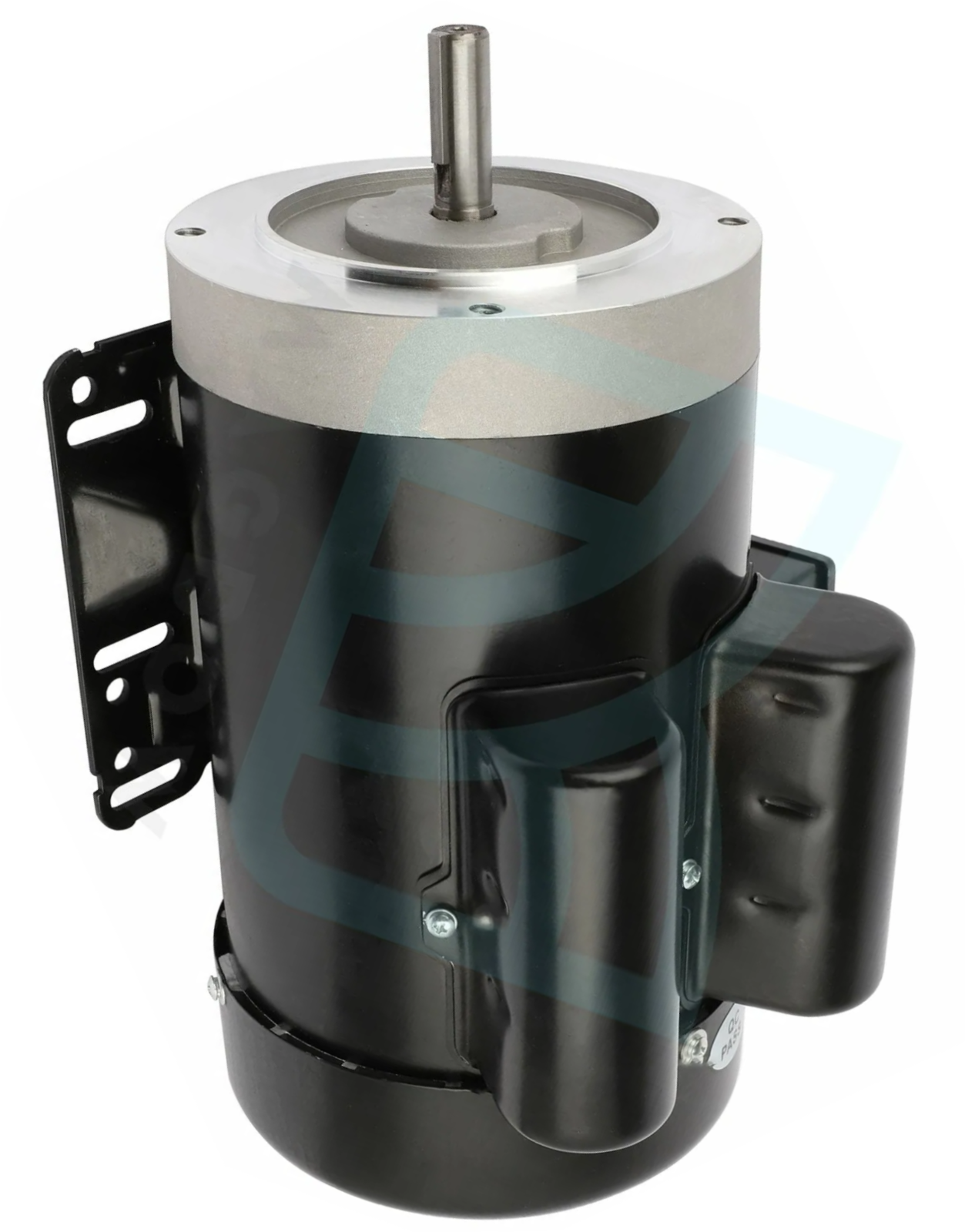
This cyclone kit provides excellent separation for use with blowers down to 1.5 hp. Unfortunately blowers smaller than 3.5 hp and impellers smaller than 14” in diameter fail to move ample air to provide good fine dust collection. These airflow requirements were set by those firms who guarantee customer air quality after decades of air engineering and experience with how much air we need to move at our larger stationary tools for good fine dust collection. Since motors come in either 3 hp or 5 hp and 3 hp is too small, I recommend you use a 5 hp motor. I personally use and recommend the excellent quality Leeson 5 hp U.S.A. made motor. It makes no sense to me to use a cheap poor quality motor for the most heavily used motor in our shop. If you choose the Leeson I recommend you use a 15” to 16” diameter impeller to best use the extra horsepower of this motor.
You can make this kit into either a left-handed or right-handed cyclone, but most motors require impellers that turn counterclockwise when viewed from the blade side which requires left handed cyclones for best air movement. If made incorrectly your cyclone turns that air in the opposite direction as your blower. A blower wastes about ½ hp to reverse the spinning air direction.
- Cyclone Kit Dimensions
The detailed plans shared on my cyclone and blower designs remain just a little larger than our kits. The kits produce an 18" interior diameter cyclone. It stands 52” tall not including blower, blower motor and collection bin. Although this kit is slightly shorter than the cyclone on my Cyclone Plans pages it only fits under a standard 8’ ceiling if you use a short collection drum. You need a taller than 8’ ceiling to use a 55-gallon drum or standard 30-gallon galvanized trashcan for your dust bin.
- Construction
The kit may be assembled with screws, rivets, soldered, or welded together, but we recommend soldering. Using the solder and flux recommended on the Build Cyclone pages makes for smoother joints and a better looking stronger cyclone that provides higher separation efficiency. Still, many build these with just pop-rivets and polyurethane sealant. Don’t use silicone caulk on galvanized metal because it reacts with zinc galvanizing and eventually comes loose. Spot welding and TIG welding work well but require specialized expertise, tools, and supplies. Welding, brazing and overheating galvanized metal produce potentially toxic fumes so use a well ventilated area.
- Cyclone Pricing
My son sells the bare unformed flat metal cyclone sheet metal kit for $199 plus $112 continental U.S. shipping, handling, insurance, and packing charges.
This same kit plus the sheet metal blower side and metal blower outlet transition costs $229 plus $129 continental U.S. shipping, handling, insurance, and packing charges.
For $299 plus $175 shipping you can get on his list to buy as they get made this same kit with all the metal rolled, folded, flanged and formed.
For $399 plus $212 shipping you can get on his list to buy a completed cyclone. - Construction
- Blower Housing
My web pages give blower templates and detailed dimensioned plans to make your own blower housing, but with Clear Vue soon back in operation my son will only sell blower housings until his current inventory is gone. These housings contain the wooden blower top, bottom and heavy metal motor plate. The top and bottom sandwich a 6” wide metal side between the wooden blower top and bottom to produce a good looking effective blower. If you want the blower side metal you must either buy it with the cyclone kit or get it cut yourself.
Key to this blower housing is the heavy motor plate. This plate fits our recommended Leeson motor with standard 56C face frame mount and this plate provides the base that supports everything else. Most use vibration dampeners and attach this motor plate to either a wall or ceiling mounted rack. This supports blower motor, blower, and cyclone. This also lets you remove the blower housing and cyclone without having to take down the heavy motor and impeller. All other small shop cyclone designs require you to take all down including the heavy motor and impeller every time you clean your impeller or have to remove a jam from your cyclone. All cyclone blower impellers should be regularly inspected and cleaned to remove any built up pitch otherwise the impeller can get out of balance and damage your motor bearings. Cyclones move lots of air and can suck up trim pieces, scraps, small tools or other items like my shop apron. Also, cyclones sometimes plug when we let the dustbin overflow. Being able to do your inspections and cleaning without having to remove then reinstall the heavy motor and impeller will save your back.
Unlike the Clear Vue blower kits that came with all the hardware, my son’s blower kits require you to provide your own hardware. You also need your own impeller, impeller arbor, motor, electrical, and blower outlet.
This kit will not fit or work with airfoil or impellers of different sizes. Also it only works with impellers that turn in the proper direction. My web pages provide free plans to build blowers that work with airfoil impellers, impellers that turn in the other direction, or different sized impellers.- Blower Dimensions
The blower spiral opens to 21” in diameter with a height of roughly 7” depending upon the depth of your grooves in the blower wooden pieces and width of the side metal. Adding the 11" tall Leeson motor gives a total height of about 18”. The Leeson motor does not need any clearance above because the air is drawn in from the side so it can be mounted flush to the ceiling. The blower bottom wooden plate is secured with six screws that let you position the blower to face in any direction you desire.
- Blower Pricing
Blower kits cost $145 plus $65 continental U.S. shipping, handling, insurance, and packing charges. Add $15 for an unformed metal transition. Add $35 for a wooden transition including shipping to go to a set of filters. California residents must also pay sales tax.
- Blower Cautions
Never run an impeller without a blower housing. You can be hurt and the impeller will move so much air it can quickly burn up your motor!
An impeller spinning at 3450 RPM turns at nearly 60 revolutions PER SECOND and generates in over twenty tons of force. If the impeller slips down the motor shaft, a light aluminum impeller gets hit and shatters, or a blade breaks this spinning impeller becomes potentially deadly. An impeller I tested slipped on the motor shaft causing the blades to impact the blower housing. One blade broke its welds and that blade tore through the 18-gauge steel blower sides like a knife through soft butter.
Also NFPA no longer recommends use of aluminum alloy impellers in dust collection systems because when hit with steel these impellers shoot off sparks like a sparkler which can trigger a fire.
Regardless of what other vendors may sell please do not use homemade or aluminum impellers. If you use set screw secured impellers please use new star tipped set screws every time you remove your impeller.
- Blower Pricing
- Motors
Many motors will work, but the details remain important. You need a face frame type motor so mounting it on a blower does not cover the motor cooling ports. You need a good quality motor with tough starting components as starting a heavy steel impeller means the motor works very hard during startup and gets warm. You need a motor with good heavy bearings to support turning a heavy blower wheel. You need to make sure that the motor when viewed from the motor shaft end turns counterclockwise and that you also get an impeller that is designed to turn counterclockwise, or that you can reverse the motor direction. You also need a motor powerful enough to turn the impeller when it moves maximum airflow.
.
Moving our 1000 CFM against the overhead of dirty filters, ducting, tool hoods, etc. means that our motor when pushing more air because we have clean filters and minimum overhead will draw 3.5 horsepower. Custom motors are prohibitively expensive so that leaves us having to choose a standard motor. The standard compressor duty motors that are heavy enough to handle our blowers only come in either 3 hp or 5 hp sizes. Yes, we can squeak by with a 3 hp by cheating and buying a motor that can handle an extra load for a while, but it made no sense at all to me to use poor quality or marginally sized motor for the most heavily used motor in our shop. I tested a few inexpensive motors and they burned up easily, so I went to my motor expert and decided we needed a real 5 hp motor. I settled on either a Leeson or Baldor motor, but dropped Baldor when they moved their small motor manufacture outside of the U.S. I worked closely with Leeson to adapt a face frame mount to their heavy duty 5 hp compressor motor that has a 7/8” motor shaft. Clear Vue Cyclones, Electric Motor Warehouse and Electric Motor and Repair all provide this same excellent Leeson real 5 hp 3450 RPM motor with the upgrade face frame mount we need to attach the motor to the blower plate and ensure good cooling.
Remember you will also need four motor mounting bolts to fit your motor with washers and lock washers, a motor switch, and motor power cord and outlet to fit your power source.- Impellers
Always make sure your impellers are professionally manufactured and balanced material handling impellers. I recommend you power our cyclone with a backward curved (BC) material handling impeller to minimize blower noise. Although star tipped set screws work, I prefer the convenience and safety of impellers with compression hubs to avoid slipping on the motor shafts. You need at least a 14” diameter BC impeller powered by at least a 3.5 hp motor to move ample air to drive this cyclone, push air through my recommended filters and still supply the 1000 CFM airflow needed to provide ample airflow to meet the major air quality standards.
Knowing this I designed an optimum impeller to power this cyclone, paid to have this impeller tested and certified and made arrangements for two firms to make and sell my impeller design. The first firm changed hands and the new owners chose to discontinue impeller sales. That left only Clear Vue Cyclones selling my custom designed impeller. Knowing that Clear Vue was closing I bought up a batch of impellers before they closed. Meanwhile I contracted with a local machine shop to make me a batch of 15.5” diameter impellers. Getting these made proved slower than expected, so I also bought up an additional batch of 15” impellers from Clear Vue. The Clear Vue 15” impellers are available for $195 each plus $25 shipping and the custom 15.5” impellers are available for $210 plus $30 shipping. When these impellers are gone, you will have to buy your impellers direct.
Because I selected a 5 hp motor as ideal to power these cyclones and the optimum 14” diameter BC impeller only pulls about 3.5 hp maximum, I came up with larger impellers to use that extra horsepower. My custom 15" diameter impeller that Clear Vue sold has the advantage of using this extra horsepower to move a little more air with higher pressure to make designing a duct system a little more forgiving. If you have the airflow in the cyclone turning the same direction as the impeller this same motor will also drive a 16” diameter impeller, but if they are out of synch then the motor will pull too much horsepower reversing the airflow. There are also other viable impeller options.
A 14” BC diameter impeller is the smallest to power my cyclone and have the 1000 CFM airflow recommended by those firms that guarantee customer air quality. WMH Tools sells Jet and Powermatic DC-1900 excellent 14” impellers for a very reasonable price of around $100. Unfortunately, these come with proprietary hub that needs replaced to work with a standard motor shaft. I made arrangements with Inchs Machinery of Loomis California (916) 652-0628 to offer replacement taper lock hub arbors that will let these impellers work with standard 7/8” keyed motor shafts.
There are a number of other viable impeller options. Murphy Rogers sells an excellent 15” diameter impeller that requires the 1 1/8” motor shaft rather than the Leeson 7/8” shaft. Cincinnati Fan sells an excellent 14” BC impeller that will mount on a 7/8” Leeson motor shaft, but the prices are set by each dealer so can vary widely. They also sell an excellent 15” impeller but it only works with the 1 1/8” motor shafts. Based on my engineering Penn State sells a custom made 3.5 hp motor that turns a 14” impeller, but unfortunately they chose to use an aluminum impeller which the National Fire Protection Association no longer recommends because these throw off 4th of July sparkler like sparks if hit by a piece of metal.- Miscellaneous
You will need some solid-core 3/4” plywood or MDF to cut your 18” diameter cyclone top ring with 9” hole.
Also you need some scrap wood to make some jigs, fixtures, and some wooden rings to help hold all together while you build your cyclone. This includes wood to make 6” and 9” rings to ensure the cyclone inlet transition, the blower outlet transition, and the cyclone outlet chute are each sized correctly and made round. If you do not buy an assembled kit, you need ample clamps to help form and hold the round metal pieces. I prefer to use stainless steel worm drive ½” wide band clamps. Buying the same brand clamps lets you screw smaller clamps together to make larger clamps. I recommend buying three or six 6” clamps and two 3” clamps. These are available for a few dollars each in the HVAC sections of larger hardware centers. A 6” clamp screwed to a 3” clamp creates the 9” clamp you need for the cyclone air outlet cylinder. Three 6” clamps creates the 18” clamp needed for the outer cylinder and upper cone. The 6” clamps let you make the transition and dust chute cylinders. Making your own cyclone also requires you to precisely cut an 18” diameter disc, a pair of 9” diameter discs, and a 6” diameter disc used to size and ensure the cyclone round parts stay round during construction by clamping the metal tightly to these discs with the worm drive clamps. These discs are required to be kept in place during construction to also ensure adding the cyclone inlet does not cause the upper cylinder to warp and lose its ability to fit to the top ring. I use two 18” rings on that upper outer cylinder.
You need either wall or ceiling mounting hardware and vibration dampeners. Standard Stanley heavy-duty shelf supports from your hardware store work well for wall mounting the blower (13” x 20”) part number 25-7555/795 scan code 33923 06819 2. You can also make a simple wall mount wooden frame that will support your cyclone and blower well. I should soon have detailed plans up on my Build Cyclone page that shares how to build this wall mounting frame. In either case you will need to provide the screws, bolts and miscellaneous hardware to mount your cyclone. You also should buy or make from a rubber hose vibration dampeners to mount the motor plate.
I recommend that you fill any imperfections in the wooden parts with wood putty then prime and paint all the wooden parts. Most plywood only takes about one can of undercoating and another can of spray paint for the wooden parts. Double this if you use MDF.
I also recommend you fill, prime and paint the cyclone and dust bin to match. Automotive spot body putty does wonders to fix minor imperfections and smooth joints before painting. Most need one small can of auto body filler, a large tube of spot or glazing putty, two cans of paint primer, and three cans of spray paint for the cyclone and collection bin.
Cyclones make a lot of noise, but this noise can be tamed. Never mount your cyclone directly to a wall or ceiling because that will transmit the sound throughout your shop and home if attached. Ideally you want to mount your cyclone outside your shop in its own enclosed area. If you put it inside it is best to use a sound insulated enclosure preferably with the sound insulating sheetrock where a single layer provides eight times the insulation as standard sheetrock. My web pages share how to make an inexpensive muffler which will reduce the overall noise by roughly half. Many find that if they have the inside of the cyclone and blower sprayed with pickup truck bed liner or rubberized automotive undercoating (not tar or asphalt based), that they have much quieter systems. This also helps avoid wear where the air first impacts the inside of the cyclone.
- Availability
Cyclone and blower kits get cut weekly, so typically get cut and shipped within two weeeks. I've paused on taking orders for any more formed parts until we get caught up with the backlog.
Unfortunately, the response remains overwhelming with a few startup challenges. I ordered up enough cut cyclone and blower pieces to cover at least six weeks of expected sales. He sold out in ten days. Thinking the business would restart slowly to make a little extra my son agreed to sell a few partially and fully assembled kits. He received more orders for partially and fully built cyclones than the two of us can build working full time for six weeks. I said no more building until he had the built parts ready to ship. My CNC cutter delivered 14” blower housings instead of the 15” ordered then went out of business leaving a vacant office and for rent sign. That left extra 14” blower housings. Until we find a new CNC cutter and my son can afford the high cost for initial programming, all the MDF parts must be hand cut. That left me to make a set of templates. He uses a bearing bit to follow these templates so his parts look better than the multiple pass CNC cuts, but make a monster dust cloud and take too much time to make. We had a few other challenges like running our laser cutter out of sheet metal and our old blower transition not fitting my newer blower design so we also had to hand make transitions. He also way overdid worrying about far too much work, so also got sick. I stepped in to both help and hire an independent contractor with all the right sheet metal tools to quickly catch up on the building. The good news is he can now fill all orders except the built units within about two weeks.- Delivery
When your check clears or PayPal notifies that your payment arrived your order gets scheduled and your order gets scheduled for shipping. He does not maintain a large parts inventory, so if too many orders come in all must await his suppliers. You will be notified if your order will take more than two weeks to ship.
- Shipping
These cyclone kits contain large metal parts that require large oversize boxes making for expensive shipping. To keep costs affordable inexpensive ground shipping gets used. This permits affordable shipping through to the contiguous 48 U.S. states with a typical 7 to 10 working day delivery time. Shipping to Alaska and Hawaii costs more and takes more time, so shipping outside the continental U.S. will be quoted for each individual order.
Additionally there are duties that must be charged and paid in advance to ship to Canada and other countries. You are responsible for finding out the brokerage fees, customs, import duties, value added taxes, etc. for your country. We do not find out this information for you nor do we take responsibility for paying these additional costs. That is your responsibility. Between these taxes and shipping charges most choose not to get items shipped from the U.S. to Canada, Europe, the Middle East, Asia, Japan, Australia or other countries.- Shipping Damage
All gets well packed and shipping is insured, but we cannot control shippers, or take on the responsibility of dealing with damages they cause. All shippers occasionally ding the metal in spite of the best packing efforts. Even my heavy commercial cyclone that came carefully packed in a molded 2” Styrofoam protector arrived so damaged it required replacement. Most problems can be fixed with a little hammer work against a hard surface. More serious problems require your working with the shipper and their insurer.
- Orders and Payment
Orders ship in the same sequence as the orders arrive. Although he prefers to receive payment via cashier's check or money order, he accepts PayPal payment. PayPal will let you pay via cash, bank transfer, or credit card. He does not accept credit cards. No item gets shipped until the payment clears. All prices and payments must be in US dollars ($). If you would like to get one of the cyclone kits please first verify delivery times then you can order a kit by email, and make your payment to:
or by sending a money order, cashier's check, or check (requires 10 working days to clear) to:
Michael D. Pentz
1909 Studebaker Place
Gold River, CA 95670
- Support
Although all of these designs are mine I own no part of this kit business and am a reluctant retiree who got volunteered to help while my son gets finished up with school and gets this business going. I provide my help at no charge and my son works at near minimum wage so we can help you out with affordable cyclone and blower kits. I would greatly appreciate your not expecting me to do much hand holding as you build your own system. More than 10,000 people now use my cyclone and most built their cyclones without kits just using the instructions from my web pages. If you are not willing to take the time to read over and follow my web page building instructions or you expect help making an undersized dust collector power one of these cyclones amply to get good fine dust collection, then these kits are not appropriate for you. Please share any problems with my instructions, suggestions for improvement to improve these pages and kits, your successes, and honest feedback.
Best regards,
Bill Pentz
Click to send me email
These web pages regularly get changed and most browsers do not automatically get the most current version unless you do a page refresh, so please refresh each page that you come back to visit. Links to other Internet information are underlined and provided in blue you can click on these links for additional information. Please start by reading over the Introduction then the Dust Collection Basics followed by the Medical Risks and Doctor’s Orders pages. Please email me (BPentz@cnets.net) if you find problems or confusion.
- Background