Links
Table of Contents
(click on topic to go there)- Suppliers
- Design Information
- Basic Information
- Cyclone Building
- Static Electricity
- Noise Control
- Hazards
- Suppliers
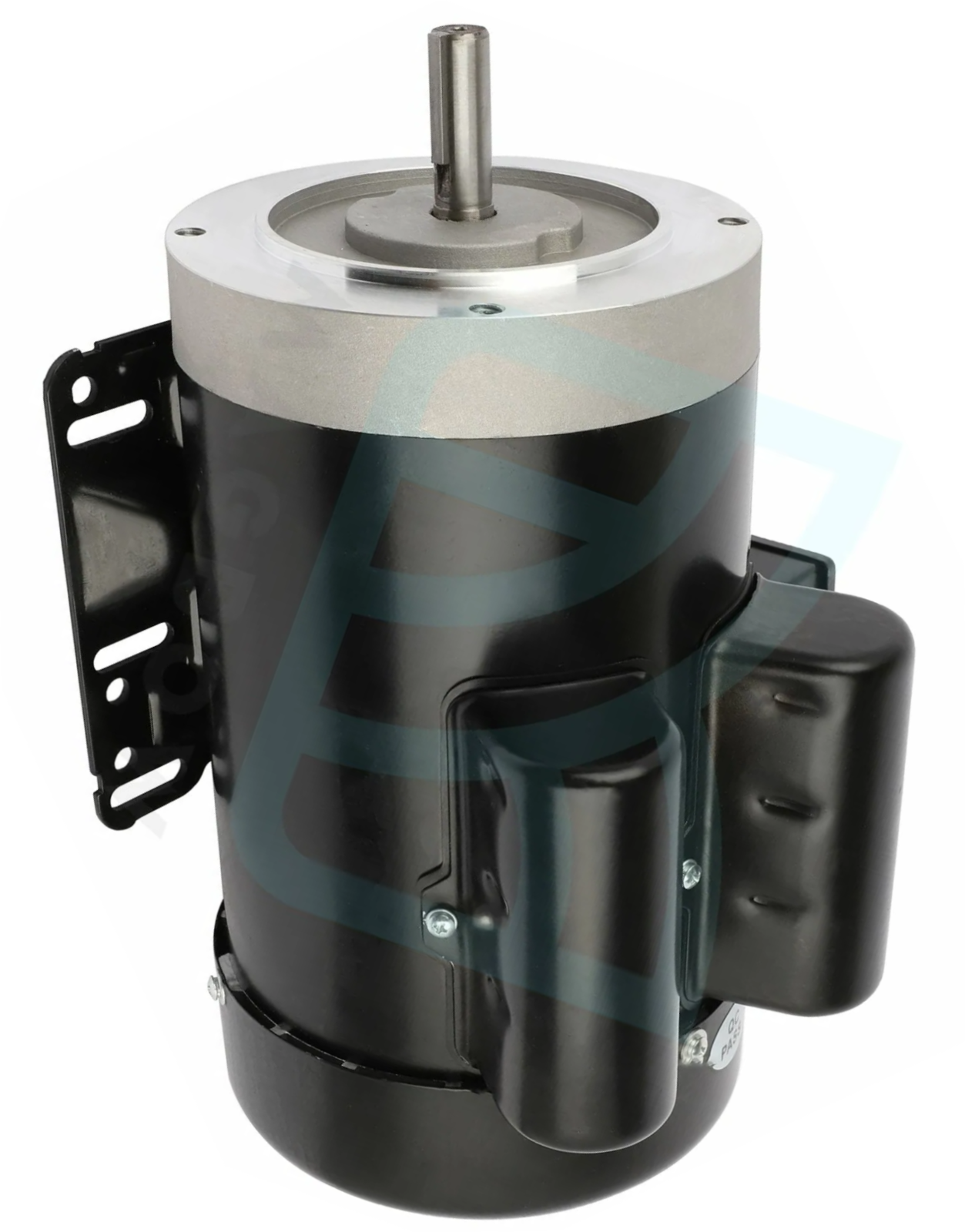
Clear Vue Cyclones James: http://www.ClearVueCyclones.com/120554.htm is the only firm I license to build my cyclone design, blower design, and impeller designs. They have long provided completed cyclones to those who just want a system they can quickly install. Clear Vue also has long provided the top quality Leeson 5 hp compressor motor I recommend along with my designed material handling impellers to those who want to build their own cyclones or build a cyclone from a metal kit purchased from my son.
Wynn Environmental (Dick & Rick): http://www.wynnenv.com/torit_filters.htm has the best pricing and service in providing excellent affordable cartridge filters, excellent and affordable fine dust air cleaners, 3.5", 4", 5" and 6" clear flex hose in 25' lengths and clamps. They are my recommended source for the Farr and Torit compatible filters in both the washable poly and the less expensive blended cartridge filters. They also offer the Donaldson Torit 0.2 micron fine filters and the newer Wynn Nano filters that I need to use to take better care of my poor lungs.
American Fabric Filters: http://www.americanfabricfilter.com/ has some of the best add on filter bags available and will custom make a bag if needed
The Electric Motor Warehouse (Barry): http://www.electricmotorwarehouse.com/120554.htm provided the top quality Leeson compressor motor that was really a 3 hp which has since been upgraded to 5 hp that I used to drive my 14" material movement impeller. They had by far the best service and prices any of us could find on the net, plus if you ask they will mount the bell housing and wire for the proper rotation!
Farr and Donaldson Torit are the two most respected names in commercial dust collection where their customers must pass stringent air quality inspections. It is well worth your trouble to spend some time on both of these vendor’s web pages looking over dust collection and filtering. I used to include the Farr table that showed most stationary woodworking machines found in small shops need about 1000 cubic feet per minute (CFM) airflow for good fine dust collection. Farr also provided the airflows for larger machines such as a CNC wood router needing at least 2500 CFM air volume with 6000 to 7000 feet per minute (FPM) air speed. Both Donaldson Torit and Farr are clear that when venting outside a 30-micron filter is ample, but when venting inside we need to use filters that provide at least 99.9% filtering on all particles sized 0.5-microns and larger. ASHRAE says all filters that vent indoors must be measured when clean and new. Additionally, both firms are clear that indoor filters are so fine that they will quickly clog and kill the airflow needed for good fine dust collection unless we use at least one square foot of filter area for every two CFM airflow. Sadly, every major name brand hobbyist dust collector and cyclone messes up badly on filter fineness and sizing. Most provide one square foot of filter for every 10 CFM of airflow and provide filters that can take a year or more before they build up enough fine dust trapped in the filter pores that they provide the advertized 1-micron filtering. Meanwhile we breathe in that fine unhealthiest dust.
Farr also has some good information on filters at http://www.farrapc.com/products/hemipleat//.. This site also has a great mini video clip of what happens during pulse jet cleaning.
- Design Information
Just about anybody can make a fairly good cyclone "chip collection" separator. I've seen these made of stacked barrels and all kinds of other things. To make a fine dust collection cyclone you need to get into the engineering, physics and airflow dynamics. I got my start on cyclone design from the Cotton Research Site (http://www.jcotsci.org then go to the top of that page and search for cyclone) and their scientific articles by Funk, Hugs, and Holt. Those articles recommend some major improvements to the traditional agricultural cyclone designs. If this is not enough, then do a Google search on swirl tubes which will take you into the physics behind centripetal tube separators of which a cyclone is a special case. From there you need to look into boundary layer and laminar air flow over various surfaces as without this you are going to pull the fine dust right off the cyclone walls and get poor overall separation. Now add in techniques to use a directed air stream to move the dust without stirring the previously collected fine dust in the collection bin back airborne. With all that you should then be ready to start engineering designing your own cyclone design.
- Basic Information
Bill's "Dust Collection Basics" is my best shot at providing the overview information you need to make sense of dust collection and its technology.
Rick Peters' book is a solid collection of good information on "chip collection": "Controlling Dust in the Workshop" is one of the best, but some of the material is becoming dated such as the grounding discussion and some of the duct sizing.
Sandor Nagyszalanczy's book "Woodshop Dust Control" is also an excellent source of information on "chip collection" and a little more current than Rick Peters' book. It also focuses on "chip collection" instead of fine dust collection, plus inappropriately tries to downscale commercial ducting designs for hobbyist use. I also strongly recommend reading some of Taunton Press articles and books on dust collection. I've found them to be a great resource. Be aware that this field is changing and evolving so quickly, none are really able to keep up!
- Cyclone Building
All including those who have upgraded from other vendor cyclones cannot believe how well these cyclones work. I published my initial cyclone design in 2000 and since then many thousand small shop owners have built their cyclones from my plans. Unlike all other traditional cyclones on the market, my cyclone is not a modified agricultural gravity based design. These traditional cyclones were engineered to separate off the heavy material then blow the airborne dust away outside. They were never designed to work with fine filters because they pass too much fine airborne dust. Many who work with MDF know that hobbyist cyclone designs fail miserably because with close to 100% of the fine dust going into the filters, they create a constant filter cleaning nightmare that quickly ruins these expensive filters. My design minimizes internal turbulence then uses a directed airflow to separates off almost all the dust including the fine dust. At least three MDF firms have changed over to my cyclone design. They consistently get almost no dust going into their filters. Instead of having to replace filters quarterly their same filters now last many years. Thousands have built their cyclones from my plans and even more thousands bought built cyclones of my design. Although there are some negative comments on the Internet from disgruntled vendors and a few prior firms I had to dismiss for their failure to perform, overall feedback on how well this cyclone works and how easy they are to build from my plans remains very positive.
Steve Silca was one of the early and brave who spent lots of time with me working through concerns.
Garrett Lambert Article on Building and Installing a Bill Pentz Cyclone on WoodCentral
Wayne Davey shows his cyclone project
Marco Denicolai shows his version
Stu in Tokyo shows his version
Stephen Saville shows his vacuum cyclones
- Static Electricity
Dr. Rod Cole has some excellent additional information on why we don't need to worry about grounding PVC on his site: Dr. Rod Cole on Grounding PVC (Click here).
- Noise Control
Dave Belliveau shared a few links to help with the understanding of noise control:
Sound Proofing 101
Noise Reduction Principles
NASA - Noise control book
- Hazards
Here are a few more sites that speak more to the hazards of wood dust.
New… National Institute of Heath News Release - Wood Dust a Carcinogen
Bill's updated Wood Toxicity Table
Austrialian Wood Toxicity Table
Australian Safetyline Institute - CONTROLLING WOOD DUST HAZARDS AT WORK
EPA PM 2.5 Objectives & History (fine particle research): http://www.epa.gov/region4/sesd/pm25/p2.htm
OSHA - A Guide to Protecting Workers from Woodworking Hazards: http://www.osha.gov/Publications/osha3157.pdf
Thesis - Fungus and Molds (another problem with wood dust): http://www.sporometrics.com/Thesis/Chapter%201.htm
- Design Information