

Home
Dust Collection Basics
Equipment
Ducting & Hoods
Wood Toxicity Table
Testing
FAQs
Projects
Administrative
Financial Help
Contact & Email

Frequently Asked Questions (FAQs)
- Introduction
- Getting Started
- Internet Woodworking Forums
- Kit Cyclones & Blowers
- General Site Questions
- Venting Outside
- Maintenance
- Blowers and Impellers
- Motors
- Dust Collectors
- Cyclone General Information
- Testing and Reference Issues
- Dust Masks and Respirators
- Filters and Dust Bags
- Carving
- Metal Working
- Introduction
These frequently asked questions (FAQs) section with answers tends to grow and grow with my regularly hacking it back every now and then moving the information into updating my pages. I recommend you read over the Dust Collection Basics area as most questions are answered there. Questions are in green.
- Getting Started
-
Bill, I am a retired university biomedical engineering professor and serious hobbyist woodworker. Thank you for your many years of dedicated work to help others avoid dust related health problems. I bought my prior expensive top rated small shop cyclone because it was advertised to protect my family's health. This cyclone had such bad airflow it did not collect nearly as well as the much smaller dust collector it replaced. It had bad ducting that constantly plugged and built-up ducting piles. Its cyclone constantly plugged its cone and constantly plugged and ruined its fine cartridge filter. I spent more time cleaning its filters and clearing clogs than woodworking. I know this vendor built their business promising health protection they never delivered.
I think the firm that made my cyclone and their competition who brings in cheap foreign tools are so ripe for a major class action law suit that would put them out of business, they have to do all they can to ruin you, your reputation and keep your message from being heard. They got you kicked off most of the major Internet woodworking forums and have flooded those forums with people who put you and your efforts down. They used their attorneys to force you to remove the objective testing from your web pages that so many helped you do. They used their advertising might to kill the major magazine cyclone tests and keep your system from being compared. Their latest appears they bought a number of testers who used bad air leaks and restrictive ducting to make your cyclone appear to work far worse than the competition.
This is all nonsense. When my expensive cyclone from the best known of these unscrupulous vendors failed to work, I built a cyclone from your free plans in 2003. After more than ten years use my particle meter shows my shop air remains clear and I get almost no dust in my filters. Thousands all over the world report similar results when using your scalable cyclone design sized from six inches on up. Many hospitals now run their HVAC systems through one of your cyclones to extend HEPA filter life at least ten-fold. I know you freely give away your plans for personal use to build the best small shop cyclone in the market and almost every small shop vendor has been slowly stealing your design, one piece at a time. Why do you let these vile cretins continue to hammer you?
Thank you for the kind words. You are absolutely right that I am in a long ugly campaign. Most don't know this campaign is against the low life who run two different firms. Initially I held the high road and helped both firms improve their dust collectors, cyclones, blowers, ducting, and filters. Neither firm honored their agreements to pay me for my work, both now both sell products that are almost exclusively my designs and both keep slowly stealing my fine dust separating cyclone design one bit at a time. The president of one of these firms told me in a phone call that I either had to go to work for his firm or he would continue to pay shills, forum moderators, forum owners, and magazine staff to put me down at every chance. He admitted paying two of the most popular woodworking forum owners to permanently ban me from posting on their forums. Two different people who work for large woodworking magazine publishers said these firms threatened to withdraw their advertising dollars if their magazines shared my work or tested my cyclone. I worked closely with a well-known woodworking author to do significant dust collector and cyclone testing. He was severely upset when he found these two vendors used their advertising might to block our filter testing on one article and to outright kill our cyclone test article that took over a year to prepare. I was stunned to later find some of our work posted on one of these vendor web pages and used to "prove" my cyclone worked poorly. That author admitted getting paid so much he compromised his integrity sharing and modifying his test results to show my cyclone works far worse than the competition when he knows from using my design for years it works six times better. He used undersized test pipe to kill maximum airflows and left the dust bin with bad air leaks to kill separation performance. More than 20,000 users of my cyclone design worldwide know these tests and a few similar were falsified. -
Bill, I am near retirement, have a large tool collection and am a long-time passionate woodworker. I have my two-car garage set up as my shop. I've been through all the different shop vacuums and dust collectors, built my own cyclone and then bought what is probably the same expensive cyclone system that put you in the hospital and launched your Cyclone and Dust Collection Pages. My 3 hp cyclone only does a fair job on collecting sawdust and chips, but a terrible job on fine dust. A coating of fine dust fills every rafter and flat surface in my garage shop. Like you I foolishly thought because I spent so much money and ran a fine filter that this system provided good protection. My vendor never mentioned a word about the need to start by upgrading hoods. I made your recommended hood upgrades and that helped lots but not nearly enough. You are absolutely correct a 3 hp cyclone does not move enough air for good fine dust collection. I developed a chronic runny nose and cough that did not go away even when I stopped woodworking. Your web pages scared me enough to go see my doctor and buy a particle counter. Both gave bad news. My doctor sent me to an allergist. I now am allergic to quite a few trees whose wood I use often.
My Dylos Products 0.5-micron Pro particle meter gave worse news. My home and clean looking shop are badly contaminated. That meter blew my mind by showing me how little wood dust it takes to make dangerously unhealthy particle counts. Even a little hand sawing put out very high particle counts in spite of my hearing on woodworking forums that hand tools are safe. Those forums are wrong! My meter shows my expensive cyclone is a big dust pump. When I turn it on with no woodworking it fills my shop with dangerously unhealthy particle counts. I then tried my so called "fine cartridge filtered" dust collector. In spite of its half as big 1.5 hp blower, it collects the sawdust and fine dust better than my cyclone. My particle counter still shows it is a dust pump and its fine cartridge filter appears to freely pass almost all of the unhealthiest under 5-micron sized particles. It has taken me nearly three decades to build up my tool collection. I did the home and shop clean ups recommended on your Doc's Orders pages and they were not good enough so I had to spend a small fortune trading carpet for hardwood. That flooring coupled with college bills from my children leaves my finances limited. What do you recommend so I can continue doing woodworking?
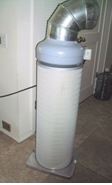 If this were my problem and even with budget limitations, I would buy or build a cyclone of my design such as the Clear Vue CV-1800 with upgraded 16" blower impeller and a pair of the Wynn "nano" filters, make sure all your tools have good hoods, add in a downdraft table, and build a good air cleaner. To keep me going my medical insurance still pays enough every three months to pay for all these upgrades including a new Clear Vue Cyclone system. I wish that had been an available option when I spent the big bucks to install my top magazine rated cyclone using vendor ducting plan, vendor supplied duct and vendor supplied upgraded finest available filter. That system put me in the hospital and cost me 58% of my respiratory capacity.
Meanwhile until you can afford a good system, follow the same advice I give to all whenever we make dust that we cannot control and collect. Always work wearing a good NIOSH approved properly fit dual cartridge respirator mask and use a big fan blowing out a back door or window with your main door cracked a little. Your meter will show this fan must be on when you start work and needs to stay on for about one half hour after you finish making fine dust to clear your shop back to outside air quality. After the air is clear I personally close all up and turn on my homebuilt air cleaner. Many now use my air cleaner design and all report they work far better than the ceiling mounted units. -
I hate you and all you are saying about fine dust. Years ago, when I first began reading your posts you struck me as a fanatic to ignore and I did. I enjoyed six years as a serious woodworker working about half time in my basement shop. I landed in the hospital with severe allergy triggered double pneumonia. I never had an allergy in my life and worked almost every type of wood without even a sniffle. Now my airflow tests show my lung capacity is down over a third, my x-rays show I have severe lung damage similar to fiberglass and asbestos exposure, and my allergy tests show I am allergic to most trees meaning woods, plus am violently allergic to cocobolo, rosewood, teak, ebony and a whole bunch of other woods I never worked in my life. Last week my doctor released me from the hospital after telling me to pull the plugs on my tools. I am now on supplemental oxygen plus a CPAP at night for life and will have to always carry an emergency inhaler. Why didn't you hit me and everyone else over the heads hard enough to get my attention before this happened to me?
After something similar happened to me I figured out what went wrong, came up with much better solutions to protect my family and me, then foolishly shared with my respiratory doctor. He convinced me that he would partner with me hitting people over the heads back in early 2001. Not only did this generate an insane workload for me, I have been called just about every name from idiot to religious zealot, with a lot of lesser profane names thrown in. Worse, the vendors who created this mess are terrified of a class action suit so have spent fortunes trying to get all I have said removed and me discredited as a religious zealot. You have my sympathy and may send me a personal email and I'll share all the things I've found that helped my similar condition. Now, I want you to help rattle the cages of the far too many who are certain nothing will ever happen to them. Most small shop dust collectors, cyclones and air cleaners are dust pumps that create a false sense of security. I believe those that use and trust most small shop dust collection equipment are driving without brakes. Crashes are inevitable, just a matter of when and how bad. -
(Note: this was written after an extended telephone call then a follow up that asked me to make a few changes.) Bill, I am an old small shop hobbyist woodworker idling down my practice as a pulmonary physician with hopes to soon retire. You cannot believe the numbers of younger small shop woodworkers and their family members who come in with serious sensitivities to a wide range of trees that don't even grow in this country. Worse, a good many of my patients that develop serious respiratory problems later in life at some point had high exposures to fine wood dust. I believe airborne wood dust is responsible for far more problems than we realize, but these problems like asbestos exposure occur so many decades later it is very difficult to tie them to a particular thing. With research money real tough to find, I seriously doubt we are going to see any studies in the near future to determine how big this problem really is.
I recently starting spending time on the Internet woodworking forums and read a few of your posts on the Saw Mill Creek forum. I first heard of you in 2002 from one of my woodworker patients. Reading your information and web pages went on my someday pile buried behind my required reading to keep up with my specialty. After reading your posts I spent my weekend reading over your Cyclone and Dust Collection Research web pages. You need to get this stuff rewritten without all the duplication and cutesy flavoring. Still, what you have to say is by far the best that I have read anywhere and thank you for your efforts.
As a pulmonary physician I fully agree with your Doctor's Orders pages. I understand why your doctor friend will not let you use his name on your site. As a teaching researcher I also have to be very careful to only put my name on peer reviewed articles and studies. Still, this is a specialty where there are just not that many experts, so I made an educated guess and called the top respiratory specialist in your area. We had a great chat as he is also a woodworker hoping to retire to his woodworking hobby in another ten years or so. And yes, he told me he is your doctor. He called you a PITA, way too headstrong and smart, and one of the finest people he knows. He asked me to give you his regards for sticking with this for so long while so many continue to badger you.
In our conversation we both agreed after more research we will see wood dust getting classified as more dangerous than smoking. The chemicals in and associated with wood cause too many serious health problems. We also both believe wood causes far more long-term problems that do not show up until our later years. Wood cell walls are like little cups similar to the silica (glass) coating that makes diatomaceous earth used in swimming pool filters so unhealthy to breathe. Our bodies build up tissue around these fine sharp particles leading to fibrosis and reduced respiratory capacity. This damage builds over time and is not an issue until we either get sick or get older.
Anyhow, I was unhappy to see you were evicted from the Saw Mill Creek woodworking forum after you posted some of the best information on wood dust collection I have ever seen. Please let me know if you want me to write the forum owner or if is there anything I can do to get you to go back onto that forum.
Thank you for your kind words of support. I've received a number of letters from other pulmonary specialists saying very similar things.
Although Internet forums are a great place to share information, they are also a very effective and sly way for vendors to promote products. In August 2004 I was asked by the president of one of the leading small shop cyclone companies to go to work for his firm. He guaranteed me at least $6,000 a month if I recommend his firm in my forum posts and on my web pages. He guaranteed a minimum of $2,000 a month plus $0.05 for every visit from one of my forum posts to his pages and 10% commissions on all sales to those who bought within two weeks of my referrals. He explained their Internet tracking let his firm track whenever someone went from my pages or posts without needing for me to include either a link or tracking ID. His alternative to my not accepting his job offer was we would go to war. If I continued to give my free support to Clear Vue Cyclones, he promised to instruct his group of paid posters to do all in their power to destroy the credibility of my web pages and of me personally. Moreover, he promised to have his attorneys tie me up indefinitely in expensive court cases. I declined his offer and shortly after was sued by multiple vendors who complained about my showing invalid test results for airflow, collection and filtering, plus slandering their firms with bad information. Facing more than $125,000 in minimum attorney fees and being assured a court would require me to pull down my pages until all was settled, I reluctantly took my attorney's advice. My attorney required me remove every direct reference to these firms including my easily verified air volume and air quality testing that showed their products have long fraudulently advertised air volumes and filtering levels they cannot deliver in real use. With nothing still on my web pages for them to complain about he was able to get those suits withdrawn or dismissed. These removals sadly diluted the value of these pages, but at least keeps them up instead of closed down by court order until we can finish slugging it out in court. My attorney said with their deep pockets and attorneys on retainer they would stall me until I died. Clearly there is both a strong positive and negative side to these forums when it comes to their financial impact, but I don't want to waste my time and money getting involved in all the drama.
Soon after those threats, I got severe warnings on both the WoodNet and Saw Mill Creek forums, plus Pentz bashing became popular on a few of the forums. Meanwhile Wood Magazine begged me to post more. WoodNet eventually tossed me off and so did Saw Mill Creek. Both get considerable advertising money from both of the vendors who I exposed as selling such dismally poor performing products. Further, these vendors pay for some of their full-time moderators. I started and ran one of the first Internet woodworking forums. I found (see forum questions) it takes a lot of time and money to run a forum with much of that time spent babysitting adults. Most forums depend upon volunteer forum moderators. A few are lucky enough to get dedicated retirees or disabled on pensions as moderators, but most end up having to depend on either a huge number of volunteers or use vendor paid shills who stay logged into the main forums every day anyway. Most forum owners are dependent on the vendor paid moderators, so look the other way when these people do their selling as long as they do so quietly. Two different firms tried to hire me to replace one of the most prolific Saw Mill Creek forum moderators. He had already been fired from Wood Magazine forums as their head moderator. On Sawmill Creek he was about to be fired because he did a poor job-sharing accurate information and kept stealing other people's answers that he changed to promote the products for which he received advertising dollars. Somehow a deal was reached to pay the owner of that forum and this fellow went from not wanted to the top moderator on their forum. I already give way too much of my life to keep up my web pages and respond to well over four hours a day of emails. I don't have the time or patience to post on forums or put up with these people paid to lie, so no please don't go out of your way to respond to Saw Mill Creek. Even if they let me return, I rarely would have time or desire to post. -
What are the fire and explosion risks with small shop dust collection?
Airborne dust in the right concentrations will not just burn, it can violently explode. Unless certified as fire and explosion proof, by law U.S. commercial dust collectors and cyclones in facilities subject to insurance, building or fire marshal inspection must be placed outside behind suitable barriers. The certification process is so expensive, plus making fire and explosion proof equipment requires such heavy metal that most commercial dust collectors and cyclones end up only certified is placed and used outdoors. Our small shop vendors almost exclusively copy and sell smaller versions of commercial dust collectors and cyclones that were only engineered and intended for outdoor use and being venting outside. This small shop equipment will not pass insurance, building or fire marshal inspections unless it is placed outside behind a fire and explosion proof wall. With no inspections, standards or oversight most small shop purchasers are ignorant so they these units and use them indoors. Additionally, this equipment is neither fire or explosion safe. Fortunately, other than when we suck up big piles of dust most small shops never create a condition where we get a potentially explosive dust to air mixture. Unfortunately, innumerable small shops have been burned down.
Most dust collection related shop fires are caused by plastic and cardboard collection bins that come standard with most dust collectors and cyclones. These fires are caused when we suck up something burning or a piece of metal creates a spark that can ignite the sawdust in our bins. When running our dust collection equipment can fan these sparks into a quick fire. When off these sparks can smolder in our collection bins then create a nasty fire that blossoms long after we leave our shops. Most know a metal nail or screw can create a spark when it hits a steel blower impeller wheel. This is why the National Fire Protection Association (NFPA) who writes the guidelines followed by most community fire and building codes used to recommend non-sparking aluminum impellers. Sadly, they changed that recommendation and issued a warning because aluminum alloy impellers when hit by a piece of metal can lose a tiny shred that will burst into flame creating the same kind of flame, we have with Fourth of July sparklers. They now recommend against aluminum and aluminum alloy impellers and instead promote steel blower wheels with metal dust bins.
The fire and explosion risks are very real, but the biggest problem is instead with fine dust. Most small shop dust collection equipment has two major problems that make fine dust levels in small shops so high that a few hours working in a small shop often generates more fine dust exposure than working months in a large commercial woodworking facility. The poor airflow in most small shop dust collectors and cyclones is so bad much of the fine dust is never collected. This is really bad news because fine dust is so unhealthy almost every single table saw cut produces enough fine dust to cause over 15,000 typical two car garage sized shops to fail an EPA indoor air quality test. Most small shop filters including on air cleaners make matters worse. Most use filter material just fine enough to filter off the visible dust. This means the unhealthiest invisible dust blows right through turning our dust collectors, cyclones, shop vacuums and even air cleaners into dust stores that store up and fill our shops with dangerously high dust levels every time they are turned on. Fine dust takes nearly forever to breakdown, and much fine fugitive invisible dust escapes collection that most even very clean looking small shops end up giving a bad false sense of security because our particle meters show almost any movement in our shops launches dangerously high amounts of fugitive dust again and again leaving most small shops with dangerously unhealthy air quality even when not making any new dust. -
Would you please explain the difference between traditional dust collection and what you mean by fine dust collection?
Traditional dust collection also known as "chip collection" collects the same dust that we would otherwise sweep up with a broom. Fine dust collection provides traditional dust collection and also collects the airborne dust particles that cause so many immediate and long-term health problems. -
So why can't I get good fine dust collection by just upgrading my 1.5 hp dust collector dust collector filters? It is one of the top rated and moves lots of air.
Experts have refined their understanding of traditional dust collection since the 1920s when the first rules went into effect to minimize wood dust created fires, explosions and worker injuries. Just about any dust collection book will teach you about traditional dust collection and offer up excellent controls. Your 1.5 hp dust collector is near the perfect size for picking up the same sawdust and chips you would otherwise sweep up with a broom. Unfortunately, this sized dust collector does a poor job of good fine dust collection. Decades of testing by the dust collection firms who guarantee customer air quality found it takes at least a 3 hp dust collector or 5 hp cyclone to move enough air to pull in the fine dust before normal room air currents blow it all over. Your 1.5 hp dust collector simply moves too little air. Worse, our tools come with hoods and ports that do a poor job of controlling and collecting the fine dust, our ducting is too small to move ample air, and even upgraded fine filter bags and cartridges rarely provide ample filtering. -
My 1.5 hp dust collector moves lots of air easily picking up heavy chips. Also, I know it takes almost no airflow to move around the fine dust particles we can see highlighted in a beam of sunlight. Why do you say it moves too little air for good fine dust collection?
It took me a while to understand why the airflow that picks up sawdust and heavy chips does a poor job pulling in the fine dust. The firms who guarantee customer air quality found good fine dust collection requires most small shop stationary tools get about three times more total air volume plus we must upgrade tool hoods and use bigger tool ports. Otherwise, a good portion of the fine dust made during woodworking escapes collection. Yes, the lightest breath blown through a straw will move fine dust highlighted in a beam of sunlight with ease, but try to move dust by sucking through the same straw. You can't do it without putting the end of the straw almost on that dust particle. The reason is sucking pulls from all directions at once so the airspeed falls off so fast that just a few inches from the straw there is not enough air movement to even budge these airborne particles. You already know this is true because when we use our shop vacuums, we get no collection unless we put the nozzle right next to what needs collected. Unless we move enough air to pull in the fine dust particles, normal room air currents will blow these particles away before they can be collected. Those firms that guarantee customer air quality have shared their decades of experience collecting fine dust and they found we need to move just about three times more air to pull in these fine light particles than we do to pick up the heavier dust and chips. The details of what they shared was very hard to find and even harder to translate for me in spite of three engineering degrees and over thirty years of teaching experience. It took lots of work and help from my friends to translate this information into a form usable in our small shops. This lack of good information is what led me to create these web pages. -
Your web pages say in terms of good fine dust collection we are wasting our time if we do not upgrade our tool ports and hoods. Why?
Fine dust is so light that it will not settle in normal room air currents and the least amount of breeze or normal room air currents will blow it away from our machines. This dust will immediately disperse to evenly fill all shared air. The only way to prevent this is to make sure that our tool hoods amply contain this fine dust so it can get collected before it can be dispersed.
The confusion about why we need to upgrade tool ports come from another misunderstanding that most of us develop after getting used to the relatively high-pressure air that we frequently have when working either with our shop vacuums or air compressors. Air at high pressures will simply speedup and snake around small obstructions with little loss in flow. Unfortunately, at the lower pressures that our dust collector and cyclone blowers work, air behaves far more like water and will barely compress at all. If you think about it all a water valve does is add a single point of obstruction in our water line. If we only partially open the water valve then we only get a tiny trickle. To get full flow we need to have the valve opened fully and the valve must be roughly the same size as our pipe. A small pipe will equally limit flow. The same thing happens with our tools as most come with ports sized to only support chip collection airflows which at 350 CFM are about one third of the 1000 CFM needed for good fine dust collection at the same stationary tools. This means that if we leave the ports as they come, most will cut our airflow to about one third of the air needed. -
I upgraded my magazine top rated 1.5 hp dust collector that moves 1100 CFM to a 2 hp cyclone that moves 1200 CFM. Both supposedly move more than the 1000 CFM you say we need for good fine dust collection, but my cyclone does not work nearly as well as my dust collector it replaced. Why? Also, why do you say neither my old dust collector nor my new cyclone will move enough air for good fine dust collection?
Unfortunately, our vendors are caught in an ugly game where instead of advertising working airflows, they almost all advertise maximum airflows for blowers not attached to dust collectors, cyclones, ducting or filters. Blowers move no air when the airflow is blocked to a maximum airflow when resistance known as static pressure is the least. At dust collection pressures air acts like water and will barely compress at all, so any small tool port, undersized blast gate, small or rough flex hose, small duct run, duct with sharp bends, dirty filters, etc. acts just like a partially closed water valve and limits our air flow. Static calculators help us to add up the total resistance in our system to help us size our blower motor and impeller. Dust collector resistance leaves most blowers in real working use only able to move less than half their maximum rated airflow. Cyclones add far more overhead as it takes a lot of power to force air into the tight separation spirals inside a cyclone, so the same sized blower moves far less air when powering a cyclone as it would when it powers just a dust collector. This creates a nasty surprise as many cyclones need almost twice as big of a cyclone blower as we do for our dust collectors to move the same air.
Blower technology is mature meaning identical size and type blowers from the major commercial blower makers provide near identical performance, but most small shop vendor blowers are not as well made. Many small shop cheap imports only move half as much air as the same size and type commercial blowers. That means we can look at commercial blower fan curves and see the maximum airflow even a well-made blower will get at any given resistance level. Commercial 1.5 hp blowers with 11" diameter impellers move a maximum of about 1100 CFM, but when challenged by the average static pressure resistance of a dust collector, tool hood, filter, and a little ducting that 1100 CFM drops to only 500 CFM. Similarly, your 1200 CFM blower on your cyclone when challenged by the typical resistance of your cyclone with tool hood, filter, and a little ducting you only get about 550 CFM. If we don't move that full 1000 CFM, then normal room air currents disperse the fine dust before it can be collected. That is why your 1.5 hp dust collector and 2 hp cyclone do a poor job collecting the fine dust. -
Why can't I just install a good ceiling mounted air cleaner or exhaust fan and get good fine dust health protection?
Woodworking makes too much fine dust so neither air cleaners nor exhaust fans can dilute the air fast enough to protect our health or avoid failing an air quality test. If you poured a large bottle of red dye or food color into a big jar, how much water or solvent would you have to add until the liquid was near clear? Hint, slowly adding a whole second glass of solvent would not even get rid of half. How long would it take to do that dilution if your exhaust fan or air cleaner only does a few air changes an hour? Remember that the fine dust spreads just as quickly as that color.
This is why those firms that guarantee customer air quality do not use either air cleaners or exhaust fans. The fine dust disperses so quickly and evenly, customer facilities will fail their air quality tests before they can get the air cleaned enough. These firms found the only way to consistently keep from failing air quality tests is to capture the fine dust at the source. -
Would you please define what is meant by airborne dust?
By definition airborne dust consists of particles that stay airborne and vanish without a trace when vented in normal outdoor air and these particles quickly break down when they get moist. Dust collection experts since the 1920s have learned that 30-micron and smaller particles consistently vanish when vented outside, so most define airborne wood dust as particles sized under 30-microns. There are a million microns in a meter which is about 39 inches long. A typical human hair ranges from about 60 to 100-microns thick, so most airborne dust is less than one third the thickness of a coarse human hair. -
How does traditional dust collection deal with airborne dust?
Almost all outdoor cyclones and dust collectors come equipped with filters rated at 30-microns. Since these units must be put outside to pass building and fire marshal inspections, the smaller than 30-micron particles simply vanish getting blown away into the outside air. Because this airborne dust gets blown away and vanishes outside, most vendors do not measure its weight when citing their dust collector, cyclone, and air cleaner separation efficiencies. -
How much airborne dust does woodworking make?
Careful measurement by the U.S. Department of Labor, Office of Safety and Health Administration (OSHA) shows that on average woodworking makes about five pounds of airborne dust out of every one hundred pounds of sawdust produced. This is about one pound for every twenty pounds of sawdust made. -
Would you please define what you mean by fine dust?
Fine dust represents a woodworker term for what medical experts call inhalable dust. Inhalable dust particles get right by our natural respiratory protections then lodge stuck in our respiratory tissues. By definition inhalable dust particles consist of fine particles sized under 10-microns. A 10-micron particle is invisible unless magnified and these sized particles stay airborne in normal indoor room air currents. Airborne fine dust spreads so rapidly it is more like an odor as it will quickly spread to evenly fill any shared air. Inhalable dust gets studied so much that researchers abbreviate its name as PM10 meaning particle material sized under 10-microns or just PM for short. A Google search on "PM health risks" will overwhelm you with over 375 million references. -
How much fine dust does woodworking make and how much does it take to cause a typical shop to fail an EPA air quality test?
OSHA measurements show woodworking makes about five pounds of airborne dust out of every one hundred pounds of sawdust produced. That works out to one pound out of every twenty pounds of sawdust is airborne dust. OSHA testing also found we have equal weights for particle size ranges meaning roughly one third of the airborne dust by weight consists of particles sized 20 to under 30-microns, one third of airborne dust sized 10 to under 20-microns, and one third of airborne dust particles sized under 10-microns have equal weights in spite of huge differences in the numbers of actual particles. This means every twenty pounds of sawdust contains one third of a pound of fine dust which works out to 5 1/3 ounces for every twenty pounds of sawdust.
Most small shop woodworkers, work in shops sized about the same as a two-car garage. A typical two car garage is eight feet tall by sixteen feet wide by thirty feet long. That works out to an area of 3840 cubic feet of air. To convert to cubic meters, we multiply by 0.0254 getting an average shop size of 97.5 cubic meters. To make the math easy I round that up to an even 100 cubic meters, so a typical small shop holds just under 100 cubic meters of air.
The EPA air quality standard says the maximum airborne fine dust shall not exceed 0.1 milligrams per cubic meter of air. A typical two-car garage sized shop contains just under 100 cubic meters of air. Multiply these 100 cubic meters of air times 0.1 and a typical small shop fails when more than 10 milligrams of fine dust go airborne. Every twenty pounds of sawdust makes 5.333 ounces of fine dust. Multiply ounces by 28349.5 to convert to milligrams, so 5.333 * 28349.5 = 151,197 milligrams. Divide this by our 10 milligrams and we see that every 20 pounds of sawdust we produce also produces enough fine dust to cause 15,112 shops to fail their EPA air quality tests. Although many vendors advertise 99% collection efficiency, the reality is measurement shows most dust collectors miss collecting over 40% of the fine dust and most cyclones miss collecting over 15% of the fine dust. Even if these systems collected the full 99% that some advertise, every 1% of the fine dust missed out of every twenty pounds of sawdust we make puts enough fine dust into our shop air to cause another 151 shops to fail their EPA air quality tests. Venting this much dust inside guarantees poor air quality and rapidly builds dangerously unhealthy dust levels that get constantly stirred back airborne. -
So tell me more about how fine dust behaves?
Unlike most airborne dust, fine wood dust particles are so fine and light that they remain airborne in normal room air currents and take a while to settle even in very still air. As a result, fine dust behaves more like a gas or bad odor as it will rapidly spread to equally fill all shared air. This means that going in and out of our home into our garage-based shop will soon contaminate our homes unless we have a positive air pressure such as a small exhaust fan blowing out of our garage-based shop.
Also, this invisible dust gets stirred back airborne with very little air movement. People who set up air quality meters in their shops found that just having a cat walk through at night stirs up considerable fine invisible dust.
The high glass content means unless it gets wet wood dust takes a very long time to break down. In fact, when researchers first opened the sealed pyramids, they found considerable fine invisible wood dust particles which were thousands of years old. This longevity means that residual fine wood dust poses a very serious health hazard not just when it is made, but instead for year after. -
Would you help me understand the differences between airborne dust by weight and particle counts? Many of our small shop vendors advertise that they provide 99.9% or better separation by weight, yet when I read the particle counts reported by other woodworkers that use these same dust collectors and cyclones, it seems someone is lying.
Up until fairly recently the only way to measure airborne dust levels was to suck a pretty large volume of air through a fine filter then weigh how much dust the filter trapped. So, measurement was almost always a weight per given air volume. Because dust collectors and cyclones had to be put outside unless they had very expensive fire and explosion certification, the airborne 30-micron and smaller particles simply got blown away outside and were never weighed or counted. Instead, what got measured is the dust inside our shops that these systems failed to collect. When stirred by normal indoor room air currents each cubic meter of air can only hold a maximum of roughly 15 milligrams of airborne wood dust. Wood dust was not considered toxic so early standards set a maximum amount at only 5 milligrams per cubic meter because that level proved very irritating to our eyes and respiratory systems.
After the weight-based standards were set further medical research showed the fine 10-micron and smaller dust particles cause most of the damage to our health. These fine invisible particles slip right by our bodies' natural protections and went right by most of the filters used to measure air quality. This under 10-micron sized fine dust is so bad that the EPA sets a standard of just 0.1-milligrams per cubic meter of air. As air pollution awareness rose, improved technology was developed to let us both accurately weigh and count the fine dust particles by size. Now we have much tighter standards that relate to just the fine dust.
Sadly our small shop vendors again play off our ignorance of these changes in measurements and standards to cause confusion. They adopt the old measurement standard that totally ignores the 30-micron and smaller airborne particles which commercial shops vent outdoors. Since about 5% of woodworking dust consists of airborne dust, when our vendors claim they collect 99% or more of the dust by weight, they mean that they collect close to 100% of the heavier dust and almost 0% of the airborne dust. This means instead of their equipment protecting us, our foolishly placing and venting this equipment in our shops results in close to 100% of the fine unhealthiest dust gets vented into our shop air. When I helped run a magazine sponsored test, we asked one popular cyclone vendor how they came up with their advertisement that their cyclone with filter provides 99.9% separation efficiency by weight. They explained what they did was weigh their collection bin, empty it, then suck that material back up and weigh what they collected. It makes sense that trying to recollect the same dust it was able to collect before would give a 99.9% separation, but what about the dust it initially missed collecting? Independent medical labs tests showed this top magazine rated vendor's cyclones and their vacuum cleaner mini cyclones provide almost zero separation of particles sized under 30-microns. That is no better than a few-dollar plastic trashcan separator lid. This dismal separation level explains why this vendor continues to sell wide open filters. If they did not, then customers would quickly tire of having to clean their cyclone filters every twenty minutes of woodworking. Sadly, this is just the tip of the problems caused by small shop vendors playing games with the standards to make their equipment seem far better than it is. They similarly play games with airflow and filtering often advertising airflows more than twice what they deliver in real use and filtering levels that their equipment never delivers at all. -
Would you please explain how your own shop tested with particle counts more than 10,000 times higher than considered safe?
The no longer used OSHA air quality tests measured airborne dust meaning 30-micron and smaller particles by weight. The medical research is clear that it takes very little fine 10-micron and smaller dust particles by weight to generate very unhealthy dust levels. This is why the EPA and European Union have fifty times tougher limits for the fine dust than for airborne dust when we measure by weight.
Roughly one third of the airborne dust by weight that we make during woodworking consists of these unhealthiest fine dust particles. Careful scientific testing shows when we make wood dust, we get a fairly even distribution of particles by weight. This means that for airborne dust meaning particles sized under 30-microns roughly one third of the particles by weight are 20 to 30-microns, one third by weight are 10 to 20-mmicrons and one third are these unhealthiest under 10-micron sized particles. This creates a huge difference in the total numbers of particles of each size. Our fine particle counters and electron microscope pictures show every 30-micron airborne dust particle breaks down into roughly 30 10-micron particles, 30,000 1-micron particles and more than 270,000 0.3-micron particles. My air quality inspector tested with gauges that measured both by weight and by particle counts. His weight tests showed just a few minutes of woodworking as we ran my expensive supposedly top-rated cyclone with its upgraded special fine filter filled my shop with as much airborne dust by weight as the air would hold. My State certified inspector's particle counter showed that the absolutely unhealthiest 0.5 to 5-micron particle counts went over 10,000 times higher than considered safe. -
Although all the different measures are impressive, just how much fine dust does it take to create unhealthy shop air?
Woodworking creates huge amounts of fine dust compared to the very little dust that medical research shows makes for very unhealthy air. The EPA and medical experts consider any level over about 0.1 milligrams of fine dust per cubic meter of air as unhealthy. To put this in perspective two tiny thimblefuls of this fine dust will cause a large two car garage sized shop to fail an air quality test. In simple terms a fraction of an ounce of fine dust is considered very unhealthy.
With woodworking every time we fill a typical small shop dust collector bag or cyclone dust collection bin which holds about twenty pounds of sawdust, we have also made at least one-third of a pound of fine invisible dust which is over 151,000 milligrams. It only takes about 10 milligrams of fine dust for most two-car garage sized shops to fail an air quality test. This is enough dust to more than fifteen thousand one hundred shops to their EPA air quality tests. -
I've read a well-known popular cyclone maker says that woodworking makes almost no fine dust that you are concerned about. Please explain why they would say this and what it is in woodworking that makes so much fine dust.
Sadly, that vendor you refer to is known among those of us who research small shop woodworking as the most disreputable in the industry with flagrant lies about all from the airflow of their products to the level of filtering from their fine filters. At first this vendor president claimed to have a PhD in this area of air engineering, but woodworkers did some serious homework and found that untrue finding he actually held no degree at all. He denied ever making such a claim in spite of a couple of people sharing posts and emails where he demanded that he be called doctor. Like most others his firm's fine dust scares inspired me to significantly improve my dust collection efforts. Sadly, their products worked terribly and landed me in the hospital with dismally bad fine dust collection. When I learned that this individual and his patents in spite of the many magazine awards are nothing more than frauds I moved on and removed every instance of their firm name from my web pages. This firm refuses to remove my name from their pages and they share falsified emails and test data that prove I support their efforts and products when they are actually the firm that left me ill and helped launch these pages.
Understanding how fine dust gets formed requires knowing about the structure of wood. Wood is a big bundle of hollow tubes and organic material called lignin. Wood gets much of its strength from silica which rapidly dulls our tools. Silica oxide is commonly known as glass and is what makes up sand. At a microscopic level when worked, wood behaves like a bundle of fine glass tubes held together by glue. Even the smoothest cut shatters a certain amount of these wood tubes at the point of contact. The drier the wood, the more it will shatter. Electron microscope pictures show that woodworking shatters these wood tubes into tiny invisible barbed shards of dust. Many of these shards become the unhealthiest 10-micron and smaller fine dust particles. The more tubes broken by our blades, bits, cutters, and sandpaper the more shards launched airborne. Power sanding, routing and shaping generate the most dust, but even the cleanest seeming operations launch considerable fine dust. -
One of my woodworker friends says he does not use any power tools claiming that hand tool woodworking creates too little dust to be of concern. Do manual tools produce significant fine dust?
Air quality meters show making a long smooth shaving with a sharp hand plane that creates almost no sawdust still launches lots of fine dust. Hand sawing just seven inches of typical three-quarter inch stock generates enough fine invisible airborne dust for a large two car garage size shop to fail an air quality test. There are no "clean" woodworking operations, hand tool or otherwise. -
Without getting too technical, what are the health risks from fine wood dust?
I do not like your message. You warn me about invisible dust that builds to such dangerously unhealthy levels it can blindside our health. Why is fine dust now a problem when woodworkers have lived with wood dust for centuries?
Working wood creates fine dust that exposes us to both short- and long-term health risks. The fine invisible dust that causes the most health problems lasts years and gets launched airborne again and again from just stirring up the air in our shops as we walk around. The peer reviewed medical studies show that every exposure to this dust causes a measurable decrease in respiratory capacity and some of this loss becomes permanent. There is a dose response relationship which means the more and longer we are exposed the worse we get. The short-term problems include eye, respiratory and skin irritation along with toxic and allergic reactions from chemicals. In the long term, the microscopic sharp barbed fibers that get past our respiratory protections end up lodging stuck in our tissues. The peer reviewed medical research shows that every exposure to fine wood dust causes a measurable loss in respiratory capacity and some of this loss becomes permanent. Long term continued exposure to fine wood dust causes damage, scaring and reduced respiratory capacity leading to COPD, emphysema, and pneumonia plus worsens other age-related diseases. -
What other health risks does fine wood dust pose?
In addition to the physical damage done by the microscopic wood fibers, wood contains and caries a wide variety of chemicals. These sharp barbed particles irritate our eyes, irritate our skin and clog our airways leading to chronic sinus and respiratory infections. The peer reviewed medical research clearly shows all who have long term wood dust exposure lose a significant portion of their respiratory capacity and one in seven develops such serious health problems they are forced into an early retirement. Many more develop problems that often worsen other age-related problems later in life.
Also, wood dust contains and carries many toxic chemicals. Wood carries many dangerous chemicals from the various treatments, finishes, insecticides, and herbicides. The molds, mildews, and fungi that break down wood generate some of the deadliest poisons known to man. Trees also produce toxins to protect themselves from insects and other predators. These chemicals associated with woodworking can be poisonous, can cause serious irritation and infection, can cause us to rapidly build up strong sensitivities with potentially deadly allergic reactions, can cause a number of diseases, and can increase our risk of cancer. We should always check a Wood Toxicity Table and wear a good respirator mask when making fine dust. -
You seem to be fine with our simply wearing a NIOSH approved respirator mask when making fine dust, but then tell us to keep that mask on until we clean out our shops. Why?
We make fine dust anytime when we do woodworking so need to either have collection that captures that dust as it gets made or we need to wear a good respirator mask. Additionally, wood dust lasts a very long time and gets stirred back airborne with the least airflow. Just walking around in most clean looking shops stirs up enough invisible fine dust to fail the EPA and medical air quality standards. Unless you are wearing your good mask you are going to breathe in this fine fugitive dust that escaped collection. -
As a small shop woodworker I developed some sensitivity probably from working with teak and rosewood. My doctor said I just have to live with this problem and stay away from these and many other woods. I understand that once sensitized I will react to all woods with similar chemicals whether I have used those woods before or not. It was not until I developed this sensitivity that I realized how big of a problem residual dust is. Now, I can't even go into some of my friend's shops without a coughing fit that keeps up until long after I leave. Would you please define residual dust and what small shop woodworkers should do to make sure it does not build up in their shops?
Fugitive dust is dust that escaped collection, often more than once from our air cleaners, shop vacuums, dust collectors, and cyclones. Residual dust is a buildup of previously made fugitive dust. Sadly, most of our small shop vendors play games with their filter ratings, so in my opinion the only safe ways to get rid of the fine residual dust is to thoroughly clean out our shops using a large blower with the doors open or to clean it with HEPA filtered vacuums. I minimize the buildup of residual dust by blowing most of the fugitive dust away outside by working with a big exhaust fan blowing in an open side door with the main door open about six inches. My air quality meter shows this much air movement minimizes the buildup of residual dust. Sadly, my same air quality meter showed every shop I tested which vented their dust collectors or cyclones inside had huge residual dust buildup ample that just walking around with no woodworking launched enough fine dust airborne these shops failed their EPA air quality tests without any additional dust making. -
I am a small shop woodworker with a basement shop and used a 1.5 hp dust collector with standard 30-micron filter bags. Although serious about woodworking, I have a very busy life and rarely get more than five hours woodworking a week except when making Christmas gifts. After I bought my table saw I coughed every time I worked in my shop. Realizing there was a residual dust problem I added an expensive ceiling mounted air cleaner, upgraded my dust collector with fine filters and upgraded my shop vacuum with a HEPA fine filter. I also bought a NIOSH approved dual filter respirator mask that I wear whenever I make dust. This stopped the coughing and I thought I was doing well, but a year after my upgrades my cough returned. After allergy tests showed me allergic to most trees (woods) my doctor said no more woodworking. He told me to get an air quality test on my shop and home as he suspected both badly contaminated with fine dust. That testing was too expensive so I borrowed a www.DylosProducts.com air quality meter. Both my shop and home tested with dangerously unhealthy particle counts. I installed fine filters but the particle counts are not falling. What else can I do?
You are working in a basement that shares air with your home which is one of the worst possible scenarios for residual wood dust. The cleanup is tough but doable. I wanted to make sure that my cleanup actually worked so I bought a very expensive air quality gauge, but today the Dylos Products work just as well and are far more affordable. I thoroughly blew out everything, then used a big exhaust fan to keep the air clear while I wore my respirator mask and used a big HEPA filtered outdoor located commercial vacuum to vacuum every wall, floor and ceiling. All of this only provided relief for a bit. I had to replace most of my carpets with hardwood and tile, get all my fabric upholstered furnishings and drapes deep cleaned, replace my acoustic textured ceilings with taped and textured, and repaint all walls and ceilings. From then on was a matter of staying away from as much dust as possible and letting time reduce my sensitivity. In addition to having to stop my woodworking I also made two large very fine air cleaners. The garage-based shop air cleaner is run after every woodworking session. The one inside the home is on a timer and runs every day for about three hours to keep the dust levels minimized. After ten years I was able to resume woodworking in a space suit with PAPR respirator and was able to no longer have to be on a full-time supplemental oxygen, but I still needed a CPAP and supplemental oxygen at night. After twenty years I am able to do woodworking in just my NIOSH mask and have finally been able to go off the supplemental oxygen at night but still must use a CPAP at night. -
Bill, I'm an engineer and have done a lot of research because there are a few pretty knowledgeable sounding people saying very different things than you on the Internet woodworking forums. My homework satisfied me that most of these people either don't know what they are talking about or are paid by vendors to mislead because they do not want what you say to hurt vendor sales and possibly get them tied up in litigation. Still, there is something I really don't understand. You say there are four major levels of dust collection and each requires different airflows. I understand that by "chip collection" you mean collecting the same chips and sawdust we would otherwise sweep up with a broom. I've seen lots of tables that show most of our stationary tools only need about 350 CFM for "chip collection". I also see other tables on your site and other professional air engineering sites that show we need to move about 800 CFM to get the air quality recommended by OSHA. I understand the need to move more than twice as much air to meet the OSHA standard compared to "chip collection" because we are collecting over a wider area and need bigger better hoods. What I do not understand is why we only need to move about 900 CFM to meet ACGIH standards that are five times tougher than OSHA standards, and only 1000 CFM to meet the medical standards already adopted by the EPA and in Europe. These medical recommended standards are fifty times tougher than OSHA standards. Why is it we only need to move just a little more air to meet the ACGIH and medical air quality recommendations?
You are right. There were four major dust collection standards including chip collection, OSHA air quality, ACGIH air quality and EPA air quality. Then the EPA was put in charge and came out with a 0.1-milligrams per cubic meter of air standard for fine dusts of any type. That EPA standard superseded all other airborne wood dust standards. This standard was upgraded in 2013 to 0.15-milligrams per cubic meter, but in 2021 the EPA is considering going back to their original standard as all the more current research shows even higher health damage.
All three prior airborne dust standards required that we upgrade tool hoods to contain, control and collect the fine dust. All also required that we enlarge tool ports and use larger ducting to move more air. All also found that we must move enough air around our machines to create a low-pressure area ample to pull in the fine dust before it can escape collection. As discussed below we have to more than double the airflow to go from chip collection to meeting the OSHA standard, but just adding another 100 CFM airflow extends the size of the bubble of air being collected amply to meet the ACGIH standard and just 200 CFM pushes it up to a big enough area to meet the medical recommendation. When I looked into how these volumes were computed I discovered that the goal is for each size range of airborne particles we need even more air speed out to a given distance. For instance, we need 50 feet per minute (FPM) airflow out to 15.15 inches to get good fine dust collection. Both measurement and testing confirm that we need 1000 CFM air volume around most small shop stationary tools to get good fine dust collection because it takes this 1000 CFM air volume provide the needed speed over a large enough area or bubble of air. The following shares these different levels and requirements.-
"Chip collection" means picking up the chips ample to pass fire marshal inspections and comply with the National Fire Protection Association (NFPA) regulations. Chip collection can be done on most small shop stationary tools with only 350 CFM.
-
After three decades of compromise and dilution the U.S. Department of Labor, Occupational Safety and Health Administration (OSHA) in 1989 set an air quality standard allowing 5 milligrams of airborne dust per cubic meter of air, but this meant all airborne dust particles sized below 30-microns. This OSHA standard became a political hot potato. Large woodworking manufacturing concerns represent a significant financial and political force. They successfully argued air quality standards would bankrupt their already financially troubled industry and installing an airborne dust standard would make them subject to industry destroying personal injury liability claims. They successfully had this OSHA standard overturned by court order before it even fully went into effect. Unlike chip collection, this standard did set an air quality level. The firms that guaranteed this level of air quality found they had to upgrade tool hoods, increase duct sizing, and upgrade from 350 CFM for chip collection to 800 CFM to meet OSHA air quality standards.
-
With far too many workers getting ill in large commercial woodworking facilities, the American Conference of Governmental Industrial Hygienists (ACGIH®) developed a standard that allows 1 mg per cubic meter of air. Although this is five times tougher than the OSHA standard, because we can use the same hoods and only need to provide a little wider coverage area air engineers did the testing and found we only need about 13% more total airflow to meet the ACGIH standards. Most small shop stationary tools that get OSHA level fine dust collection with 800 CFM get ample collection with 900 CFM to meet these ACGIH standards.
-
Finally, the European Union came out with its 0.15-milligram per cubic meter of air standard followed shortly by the EPA coming out with its 0.1-millimeter per cubic meter of air standard. That new EPA air quality standard was ten times tougher than the ACGIH standard and fifty times tougher than the prior OSHA standard. Again, those firms who guarantee customer air quality found we again need to upgrade tool hoods, use larger tool ports and ducting, and need to move about 1000 CFM more airflow to get good fine dust collection on the same small shop stationary tools that get good chip collection with 350 CFM airflow. In 2013 the EPA was given responsibility for setting airborne dust standards and they revised to match the European Union at 0.15-milligrams per cubic meter. In 2021 the EPA began reconsidering going back to 0.1-milligrams per cubic meter because too many people are getting ill at the less restrictive standard.
-
-
Why don't you recommend the typical dust collectors and cyclones that the magazines, dust collection books, and other experts all seem to recommend?
Almost all small shop dust collectors, cyclones and readily available ducting are sized to only move enough air to provide good chip collection and come with filters that freely pass the unhealthiest dust. Why should I recommend equipment that moves too little air and has such open filters these units when vented indoors are little more than dust pumps? -
You are pretty harsh on small shop vendors for making dust collectors and cyclones for indoor use. Would you please explain why?
Most small shop dust collectors and cyclones pose enough fire danger that they can only be used outside behind fire and explosion proof barriers if put into a shop subject to fire marshal inspections. Worse, almost none of this equipment moves enough air for good source fine dust collection, plus most has such open filters that when used indoors these units become dust pumps. Worse, most leave a bad false sense of security by leaving clean looking shops while building dangerously high residual dust levels. -
You strongly recommend against the fine bag and cartridge filters that now come with most dust collectors and cyclones as well as the upgrade filters available for existing units. Would you please explain why?
Okay, I understand the problem that our small shop fine filters that we buy for our dust collectors, cyclones and air cleaners to protect our health turn these units into dust pumps. Why don't our vendors get smart and provide the level of filters we need?
The simple answer is our vendors cannot provide ample filtering which is why I keep saying to put and vent this equipment outside. When more small shop woodworkers learned about the dangers of fine dust our small shop vendors got devious with their filter offerings. These vendors have a very real problem. Their dust collectors and cyclones separate so poorly that most of the airborne dust ends up in the filters. This means that if they use real fine filters these filters will clog every few minutes. Not only does this pose an annoying cleaning problem, cleaning breaks down our fine expensive filters requiring replacement roughly every full-time quarter of use. That leaves small shop vendors between a rock and hard place. If they provide the filters we need, their units are too expensive to be cost competitive plus these filters make for constant cleaning and expensive replacement. If they do not at least say they are protecting our health they lose significant market share.
Led by a leading cyclone maker their solution is to play games that let them advertise fine filters without having to sell them. We have two filter rating standards. The indoor standard set by the American Society of Heating, Refrigeration and Air-conditioning Engineers (ASHRAE) requires testing all indoor filter performance when clean and new. The outdoor standard sizes filters so they do not pose too much resistance when they fully season. Filters build up a cake of dust in the filter pores that does not come out with normal machine type cleaning. When a filter can hold no more dust it is called fully seasoned. This seasoning adds resistance while improving filter performance. A fully seasoned filter filters about twenty times better than a new filter. Our small shop vendors advertise filters based on their fully seasoned rating. This means they sell us filters that we think protect our health which instead freely pass the finest unhealthy dust until they fully season which in a typical small shop may take years.
The only other options are either expensive automated cleaning systems that still quickly ruin filters or a whole new type of separator which unlike traditional dust collectors and cyclones, actually separates off most of the fine dust before it gets to the filters. This is why I came up with my cyclone design which provides more than five times better fine dust separation than its nearest competitor which happens to be one of my earlier cyclone designs. -
What size and how fine of a filter do I really need for my air cleaner, dust collector, or cyclone?
The medical experts all agree that we need filters rated when clean and new as 99.9% efficient as separating at least 0.5-micron and larger particles to protect our health and most would prefer we actually use 0.3-micron filters. So, all three, your air cleaner, dust collector and cyclones should all use filters that separate this fine unless you vent outside in which case a 30-micron filter is ideal.
Woodworking makes so much dust that it will immediately clog fine filters unless they are huge. The size of the filter is also fairly easy to find. Those vendors who guarantee customer air quality recommend we use roughly one square foot of 0.5-micron filter area for every two cubic feet of airflow. We need almost the same size filters when using 0.3-micron filter material.
To get actual airflow simply take most vendor's advertised maximum airflow and divide by two to get the working airflow measured in cubic feet per minute (CFM). Divide that by two and it will give you the minimum square feet of 0.5-micron filter material.
Unfortunately, if you install these sized fine filters, you will be unhappy. Not only will you need to clean your filters constantly, often every twenty minutes of woodworking, you will also have to replace these filters in as little as every three months depending upon how much woodworking you do. The problem is this much dust and the heavy cleaning rapidly ruins fine filters.
The typical small shop hanging air cleaner filters come with an outdoor rating of 0.5 to 3-microns but the ASHRAE rating which is done when the filter is clean and new is ten to twenty times worse. This means that most air cleaners are dust pumps that push the unhealthiest invisible dust right through while filtering off the visible dust that tends to ruin our wet finishes. Worse, the airflow from these units is so poor that most need six or more hours use to bring the fine dust levels down amply to pass the outdoor air quality tests. As a result, I only use my air cleaner to protect my finishing.
I strongly recommend against buying most cyclones and dust collectors with fine filters or buying fine filter upgrades and instead recommend you move your dust collector and cyclones to vent outside and use inexpensive 30-micron filters. -
Ok, this is all well and fine, but I'm just getting started at woodworking and my budget priorities are my family. What should I do to provide good fine dust protection?
Fine wood dust remains so unhealthy that my respiratory doctor recommends we work outside as much as possible while wearing a good NIOSH approved dust mask whenever doing woodworking. Further, when working inside he wants us to wear our mask and work with the main door open a bit with a big exhaust fan blowing out a side door or window. Afterward he wants us to keep on our mask and fan until we have cleared our shops of the residual dust. Our particle meters show that takes about one-half hour. Because fine dust spreads in any shared air and is easily carried on our clothes, skin and hair to contaminate any area we visit, he recommends a number of additional steps to ensure we do not contaminate our homes, vehicles, offices and other areas we visit. He very much recommends my friend's idea of having a bathroom vent fan that blows outside be wired to turn on when we turn on our shop lights. That fan creates a low-pressure situation so when we go in and out our home the dust stays in our garage-based shops. We do need to be careful these fans do not pull carbon monoxide backward through any heater, stove or fired appliance vent. He also recommends we wear a jump suit, scarf and hat when sanding or doing other work that creates lots of fine dust. Leave this clothing in the shop instead of tracking the dust into your vehicle and home. To prevent badly contaminating our homes he strongly recommends that we never work inside our homes or in a basement with airflow shared into our homes. Please see my Doc's Orders Pages for more detail. -
Bill, I am also getting started, already dropped more dollars than I dare tell my wife about on my 1.5 hp Delta dust collector, and just finished getting scared to death by your web pages. I have a basement shop that shares air with my home and not even a fine filter on that dust collector. Can I fix that collector enough to get by until I can afford a cyclone?
The only thing that will expose you and your family to more fine dust than a basement shop is a shop doing your woodworking from a room inside your home. Even a good NIOSH respirator mask is worthless if you are spraying dust. With your dust collector you must take almost all fine dust making operation outside and this means just about all woodworking where you touch wood with blades, bits, cutters or sand paper which makes or sprays fine dust, period end of discussion. And yes, fixing your tool hoods, using larger tool ports, larger 6" ducting, and putting a fine big cartridge filter on your dust collector will all help lots. Still almost all small shop fine filters freely pass the fine dust so you still will have to replace your filters. You will also have to use filters with far more surface area because dust collectors push too much dust into the filters, so they will too quickly clog and stop passing air unless they have far more surface area. Even so, you will still have to regularly replace your fine filters because these filters use much finer more easily damaged fine filter strands and this dust is full of sharp particles that will push, cut and tear their way right through your fine filter especially during cleaning. You need to use an amp meter, air gauge, or expensive particle counter to know when it is time to change these filters. As filter open up, they flow more air and the more air moved the higher the amperage draw on our blower motors. Likewise, an air gauge will show more airflow and particle counters show much higher particle counts as a filter gets worn out. Commercial shops almost always use outdoor filters where they can exhaust the fine dust outdoors, because they are much sturdier than fine filters and fine indoor filters are more expensive and need constant replacement. It all depends upon how much fine dust you make, the surface area of your filter, and what kind of wood you use. If you use lots of the very toxic exotics like cocobolo, walnut, incense cedar, and even oak, then you need to change more often. -
Many vendors now offer ceiling mounted air cleaners, yet when I read over your material, I get the strong impression that these units are near worthless for protecting our health and pretty much only work to keep from getting dust in our finishes. What do you think?
I think you are a pretty astute. Almost all woodworking ceiling mounted air cleaners use open filter media that gets rid of the 10 to 30-micron sized particles that ruin finishes while freely passing the under 10-micron particles that do the most damage to our respiratory health. My testing showed that all major brands of ceiling mounted air cleaners took about six hours to reduce the airborne dust that ruins finishes, and none of these ceiling mounted air cleaners actually filtered off the unhealthiest 10-micron and smaller particles. -
What do I really need for safe dust collection?
Wood dust is much like smoking. Different people are affected differently over a long period of time. The immediate risk from airborne wood dust is getting constantly clogged up. This causes most to develop infections that become chronic if you keep taking in too much airborne dust. Most airborne dust is made up of particles 30 microns and smaller. The next most serious concerns with taking in too much wood dust comes from the chemicals in wood and carried on wood. Some of these chemicals are poisons, cause permanent nerve damage, cause irritation which leads to infections, are sensitizing agents that increase or risk of having a potentially fatal allergic reaction (the problem that nearly got me), can increase our risk of cancer, can cause a number of diseases, and the fine invisible particles cause permanent loss of function that increases over time depending upon exposure. Please see my Medical Risks web pages for more detail. Unless you have an immediate toxic or allergic reaction the odds are it will take ten or more years of regular small shop dust exposures before you develop enough symptoms to affect the quality of your life. Being foolish and badly contaminating your home with woods known to be toxic can cause serious problems in a few days. Since our bodies have a very difficult time getting rid of this dust, the more we take in and longer the exposure, the faster we build up allergic reactions and develop dust related health problems. To pass the medical air quality inspections in my state, you need to capture these fine particles at their source before they become airborne.
The air engineering information I found shows that the older cubic feet per minute (CFM) tables were designed to collect sawdust and chips now known as "chip collection". The newer tables show we must fix our tool hoods and provide a much higher CFM our tools to collect the fine dust. The issue with hoods is simple. Our blades, bits and cutters often eject dusty air streams at over 100 miles an hour. Even a very powerful dust collection system rarely moves air at over 60 miles an hour. Unless our hoods block and contain these fast-moving air streams we make so much fine dust that we quickly end up with badly contaminated shop air. In addition to upgraded hoods we also must move enough air to make up for our tools and hoods not really fully containing the fine dust. To meet OSHA air quality standards air engineers found we need to move about 800 CFM at our larger tools and closer to 1000 CFM to meet the fifty times tougher medical and EPA air quality standards now already adopted in Europe and the U.S. for indoor air quality.
Fixing our tool hoods and providing enough airflow is still not enough. We also need enough airspeed in our pipes to ensure they do not clog and we need to get rid of the fine dust. We must keep wood dust moving without clogs, plugging, or building up dangerous dust piles inside the ducting. We have tables and years of testing that show most of us are fine with systems designed to ensure about 4000 feet per minute (FPM) airspeed in our vertical ducting runs.
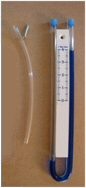 Finally, getting rid of the fine dust is not so easy. Fine dust rapidly clogs fine filters killing the airflow we need for good collection. Cleaning our fine filters is a pain and rapidly ruins these expensive filters, so most commercial shops use a cyclone to separate off the heavier sawdust and chips then blow the fine dust away into the outside air with no filters. Those who filter need to replace fine filters after about 20 full bins of chips which is roughly quarterly or about every 500 hours of use. We need a manometer to know when to change our filters. This only cost about $16 (search for Radon store manometer) to buy or you can easily make one from a clear tube looped and filled with colored water. When the blower is off the water level is at zero. Put a ruler on that tube with the end (zero point) at that water level when the blower is off. When the blower turns on if we have more than 1" of pressure then we have too little filter area for our air flow so need a bigger filter. When the filter goes over 2.5" it is time to clean.
-
I've been watching these dust collection discussions on the Internet forums for a while, and you are the first to make a big deal about FPM. What is this and why?
Feet per minute (FPM) is the speed of the air in your ducts and is what holds the dust in the air instead of letting it fall and get stuck, mostly in our vertical runs. Likewise, airspeed and air volume combine to determine what sized particles we will move and over what total area. After many years of testing and experience, air engineers developed and refined their material handling tables to show how much airspeed and volume are needed to collect and transport various stuff. Sawdust and wood chips require up to 4500 FPM for collection and transport, but with the mostly smaller chips in small shop woodworking we can get by with less volume and speed. If you make nothing but finer sawdust and chips, meaning no planer, router, shaper, etc. you can get by with as little as 3000 FPM in horizontal runs and 3700 FPM in vertical runs. Most make larger chips, so air engineers build our dust collection systems with about 4000 FPM airspeed to ensure we do not get clogging in our vertical runs. Going well beyond that is easy, but begins to cost money buying a bigger blower and paying for more power than you need. -
You say you built your cyclones and different blower combinations to move 1000+ CFM at your larger machines with an air speed inside the ducts of at least 4000 FPM. I just finished reading a site put up by a professional engineering firm and they say I only need 350 CFM at my machines. Why can't you guys be consistent? Who do I trust?
Sadly, we had an old standard that worked well for "chip collection" which means picking up chips and sawdust you would sweep up with a broom and dustpan. To get the really fine under 30-micron sized particles right at their source, you need to move considerably more air. I don't know which site you went to that gave you that information, but most of the professional sites were upgraded in early 2002 after my friends and I started a major Internet education campaign to get some of the bad information cleaned up. Those old "chip collection" numbers of only 350 CFM are dead wrong for getting the really fine dust. Check the CFM Requirements Tables above then the ducting pages. On the first you will see real CFM requirements, not dated information or something put out by a firm trying to sell undersized or dated equipment. -
Do you honestly think that it's worth putting in 6" ducting and hoses right to your larger tools and installing a cyclone?
Yes, I do! Please go read my Dust Collection Introduction web page. -
Just like you I am a long-time woodworker and lately have been more and more bothered by the dust. I know you are right and I am willing to start making changes today. What do you recommend for my priorities?
-
Get yourself in to your doctor and make sure you are not developing a serious problem.
-
Start with the same steps just mentioned for a beginner.
-
Finally upgrade your dust collection system with good dust collection hoods at each machine to catch and control the fine dust at its source, ample ducting to move that dirty air, and an appropriate system for your needs. For sure build yourself a good sanding table that you use whenever hand sanding or using your random orbit sanders. What my doctor told me was to work outside with a good dust mask whenever possible, use a good trashcan separator and exhaust the air outside if it is safe and legal, or buy a good commercial dust collector or a good cyclone with high quality NIOSH 0.3 micron approved cartridge filters. My own experience found there were no good cyclones for indoor use, so if you don't choose to go with my cyclone design at least send the dusty air outside.
-
-
Perhaps my intuitive sense of physics is wrong, but I don't understand why more airflow is required to pick up finer dust. I agree that fine wood dust is like asbestos in that it is near invisible and can be deadly to our health over a decade or three. This finer dust stays suspended in the air for hours even with no air movement. If the air near where me make that dust and the dust we can see is moving into the hose, shouldn't the fine dust go too? My intuitive sense of how this works is that the finer the particle is, the easier it is to move. Everyone knows that a fraction of the air movement needed to pick up heavier chips will easily move this fine dust. It seems to me that if the airflow is enough to pick up the big stuff, and keep it from clogging the pipe, it ought to be enough to pick up the little stuff and keep it from clogging the pipe as well. If there is a good answer to why my intuition is wrong, I want to know it. The answer that will convince me you are right is one that is based on the physics of the situation, not "the table says so." I don't need a super-detailed physics lesson. In fact, I'd settle for a good hand-waving (no pun intended) argument about why my intuition is wrong.
You are correct this at first does not make sense, because these fine particles get moved by so little air movement. Considerable testing by air engineers and all their experience proves we need to move the additional air but does not explain why.
To understand why, let's start with "chip collection". For good chip collection we need tools that are designed to blast all the heavier sawdust and chips from our blades, bits, cutters, belts, sandpaper, etc. in a specific direction. Our tools then use a hood to capture that fast flying and easily visible stuff and direct it to our collection port that ties to our ducting. We need enough airspeed to pull in that dust and enough airspeed to keep it from settling into dangerous piles in our ducting pipes. We also need to move enough air volume to cover the whole area where the chips are being drawn from. Air engineers long ago did considerable testing on most stationary woodworking tools to develop the hood designs we need and define how much airspeed and air volume were needed at each tool. Airspeed to keep the ducting clear turned out to be more than needed at each machine, so most air engineers round the needed duct airspeed up from about 3800 feet per minute to 4000 feet per minute as an ideal speed. Most of the smaller commercial stationary tools that are identical to larger small shop tools get excellent "chip collection" with an air volume of between 350 to 450 cubic feet per minute. Lots of testing confirmed those values. The firms that sell dust collection components to air engineers developed excellent "chip collection" airflow requirement tables sharing how much air volume is needed at each tool for good chip collection.
In 1989 when OSHA imposed five times tougher airborne dust limits, the dust collection equipment suppliers had to go back to work. Almost all large commercial shops already blew the fine dust away outside, so getting the fine dust levels down meant going after the fine airborne "fugitive" dust that escaped collection and being sent away outside. They found that 50 feet per minute airspeed was ample to capture this fine airborne dust and overcome normal room air currents. As proven by a few of the newer tools built from the ground up with good fine dust collection built in, they were absolutely right, a large shop vacuum does a great job on fine dust collection on these specially built tools. In our real world, most of us buy tools with older designs that at most provide "chip collection" with no fine dust collection built in. They are not optimized to control or capture fine dust. Air engineers found that most small commercial tools that are identical to our larger small shop tools had serious problems with their designs allowing our blades, bits, belts, cutters, sandpaper, motors, etc. to launch the fine dust all over before it could be collected. It was near impossible to stay under government airborne dust limits once that dust escaped, so they had to capture it as it was made. Repair required even better hoods and, in many cases, extensive tool modifications to keep that fine dust protected and controlled until it could be collected. Even with these better hoods, they still had a problem with our tools blowing too much of the fine dust away before it could be collected.
Their solution that proved workable requires both better hoods and building a fairly good sized "bubble" of air around the dusty portions of our tools to pull that air back before it gets launched into our room air currents. Their testing found the airspeeds that worked well for chip collection also did a great job for fine dust collection, but they had to move just over double the air volume to build a big enough "bubble" to ensure collecting this finest dust as it was made.
To answer why we need to move so much more air to build this "bubble", we need to understand the basic difference between blown and sucked air. When we blow we create a directed stream of air. That stream will stay together for a fairly long distance until slowed by friction. Conversely, when we suck, we end up creating a low-pressure area around an opening that gathers equally pretty much from all directions. Most of us already know this from working with our shop vacuums. When we put them on blow, they will stir the air all over our shops, yet when sucking we can only pickup right next to our collection hose. The math shows airspeed falls off at about the same as the surface area of a sphere expands which is 4 times Pi times the square of the distance away. Our 4000 foot per minute duct airspeed that moves a real 349 CFM in a 4" diameter duct drops to well under our needed 50 feet per minute airspeed just 6" away from the center of our hose. We end up having to use much better hoods and move lots more air or those particles will get blown away by room air currents before they can be collected.
The other issue you raise is a serious concern. The 2.5-micron and smaller diameter particles that cause the most long-term health problems are near invisible. As a result, shops like mine that used finer filters that gathered in most of the easily visible dust and kept my tools looking clean may well generate a false sense of security because most small shop filters provide little to no filtering of this finest near invisible dust. So, yes you are right, "…visible dust collection performance is not a reliable indicator of invisible dust collection." You are also correct that this lightest dust is even more easily sucked up, but unless you are providing ample collection and then either blowing it away outside or filtering it off, it will just build in our shops to dangerously unhealthy levels. With the airflow from our tools pushing this "fugitive" dust airborne again and again, it poses a serious long-term danger to most small shop woodworkers and all close to us. About the only way to find out if you have this problem short of expensive professional testing is to use a laser pointer and see if lots of fine dust is escaping collection or through your filters. -
- Internet Woodworking Forums
-
I know you have been posting on the various Internet woodworking forums since back when they were news groups and rumor has it you even were a moderator if not creator of one of the larger early forums. How much of this is true and why don't I see you posting much anymore?
I started using the Internet, email, and news groups when in the military and as a university instructor back in the middle seventies long before it went public. So yes, I have made a few woodworking posts over the years. Yes, I also helped form one of the early Internet woodworking forums then moved on quickly not liking the baby sitting required to keep adults behaving civilly toward each other. And no, as much as I like most of the people that visit the various woodworking forums, I don't particularly care to post dust collection information on forums. Most of these forums work well for simple question and simple answer types of communication, but when more is involved, like dust collection, responding takes lots of work and typing. Many woodworkers have not taken the time to learn the basics of fine dust collection. That means any time I post I get buried in a ton of questions that are far better answered here on my web pages. Worse, many misinterpret what I say without long winded explanations. Writing has never come easy to me and is now physically painful due to health issues. Dust collection is also a very dicey topic because almost every small shop vendor that sells tools and dust collection systems sells "chip collection" technology that works poorly when it comes to fine dust collection. People do not like hearing they were stupid just like me. They like even less learning that the expert figures we have long trusted badly let us down when it comes to giving good dust collection advice and accurate dust collection testing. I spent a small fortune on the top recommended small shop dust collectors, cyclones, fine filters, air cleaner, and ducting system that made my shop air worse than if I had stayed with my broom and dustpan with a strong fan running in an open doorway. Also, in spite of preferring to be just one of "the guys" on the forums, my attorney after fending off six threatened suits, has made it clear that because of the popularity of my web pages, what I say carries far more weight than most who post on dust collection. My comments can and do greatly impact sales and the well being of many people. Giving quick dust collection answers without tons of backup information and the exceptions has inadvertently hurt a few of those firms I respect and support. For these reasons, I keep my posting to a bare minimum. -
Okay, so you should not post on the woodworking forums, but why do you keep letting the same few people bash you again and again on these same Internet woodworking forums?
My personal feeling is that any group whose members tolerate this kind of bashing is a social club where I choose not to spend my time. As I said before I helped start and moderate one of the early woodworking forums. I discovered that any forum that allows people to join freely without a real name and email address tied to their home ISP is a forum that will need a lot of babysitting. Sad as it is to admit, our forums that started out as a good way to share knowledge and entertainment, have become overrun by vendor paid forum administrators and shills whose livelihoods depend upon their making posts that promote vendor products, attack competition, and cause threads that can hurt their employer to quickly get erased. Forum administration is a thankless pain in the tail job that consumes major hunks of time. Most forum administrators lose patience and want those people who draw negative attention to not post, plus they quickly delete discussion threads that turn personal throwing out everything, good information and bad. As a retired senior computer engineer who was responsible for Internet information security for a large government organization, I can easily trace posts to find the person's name, address, and ISP. I traced the major complainers and found that of the fifty people attacking my efforts, there were really less than a dozen unique people who were posting under different names with different email addresses. Eight of these people all are located near the better-known supplier of cyclone dust collection equipment, plus two more were people the president of that firm told me he wanted to fire because they were idiots and constantly giving out bad information. Meanwhile there are all kinds of people who regularly post on the various Internet woodworking forums:-
Most just like to share their knowledge. I know from personal experience that my students and even my own adult children are reluctant to listen to the "old salts" that spend so much time-sharing war stories and have an opinion on everything unless they want an answer to a specific question then they are all "ears".
-
Some people like to post because they like to stir things up. These folks either get very good at couching their responses or cleverly initiate controversy in the form of innocent sounding questions.
-
Sadly, I think the largest reason for sharing, particularly by those who post constantly on a wide range of topics is money. These forums are now big business. At over $12,000 a page per issue, vendors spend many thousands of dollars a month to get you to see their ads in the popular small shop woodworking magazines. Don't you think these vendors are willing to spend $2000 a month for a well-known poster to promote their products when our free woodworking forums often have more subscribers? With my name being well known for dust collection in the woodworking industry almost every major vendor has approached me with offers to work with or for them. A number of my friends make a good portion of their incomes from this advertising. The normal approach is for the vendors to approach the more respected posters and forum moderators with guaranteed minimum monthly payments plus sales commissions. The more popular small shop forums now represent big business where key vendors spend large dollars on these paid shills to promote and defend their products. They generally employ well known woodworkers who honestly promote dust collectors and cyclone systems they believe help without ever taking the time to use a meter and learn that they actually push dust pumps that raise the unhealthiest invisible dust levels to dangerously unhealthy.
As a forum moderator and frequent poster, I was approached in the late nineties with a pretty big offer. The dust collection articles I put on my web pages stirred up incredible interest. A firm offered to pay me 3 cents for each visit to one of my web pages that contained a link to their pages plus 5% commission on each sale that came from my pages or my posts. With a unique visitor count already in the thousands a day, I would be making $100 a day, plus a few thousand a month in commissions. All I had to do was run their unique visitor tracking software and include in my links to their web pages a special code that identified me for payment. I have spent most of my life working in the scientific world where any instance of trading on my skills our putting out information that will not pass a peer review can destroy our credibility and career. I also had experience with that vendor's products and did not want to recommend them. I said no.
I also learned there is also a very negative aspect to how many dollars these free forums impact. It takes only a few words from those we respect to seriously hurt product sales and apparently the bad things I was saying about poor dust collector and cyclone collection were hurting some of the more successful advertisers. Two approached me fairly, explained how much any negative post from me hurt, and asked me to be gentler. They also complained that my early posting of test results which were accurate, just no longer applied because they had mostly due to my efforts greatly improved the performance of their blowers, dust collectors, cyclones, and filters. I agreed to back off if they stopped making illegal exaggerated advertising claims for performance levels their equipment could not possibly attain. I severely backed off, but sadly they continue to falsify and gravely exaggerate their actual working airflows and filtering to the point that all major brands of shop dust collectors and cyclones pose too much health risk to safely vent inside.
-
-
- Kit Cyclones & Blowers
-
I don't have the expertise, time, or interest in getting into metalworking. Why don't you offer your cyclones for sale either assembled or in kit form?
When I started this effort, I was a senior engineer and most senior university instructor where I taught. These far more than full time efforts came with two pagers and a paging type cell phone. I am disabled with a bad leg that limits me to at most a couple of hours a day total on my feet. My medical problems forced me into an earlier than planned or desired medical retirement. That left me without the physical ability to run or manage another business, saying nothing of now being even far less able to do the work myself. Early on when my children were still in college, I helped them cut out cyclone kits to help them earn a little extra spending money and help woodworkers uncomfortable with laying out the plan and cutting the metal themselves. My son still builds cyclone kits during his spare time, but stopped shipping because he tired of having to build cyclones under the pressure to replace those ruined by shipping damage. -
Why don't you continue to make metal cyclone kits available or sell an all metal cyclone? I think that would be an incredible business and get rid of the one drawback I see with Clear Vue Cyclones using a plastic design.
Thousands have used the detailed dimensions from my web pages give to cut and build their own cyclone. During the summers my son used to sell precut metal kits, but he tired of all the shipping damage and customer questions, so stopped selling these units. My son found that shipping the large light metal cyclones resulted in so much shipping damage that he wasted too much time building replacements. You can buy a completed cyclone from Clear Vue Cyclones. We found that the plastic that Clear Vue Cyclones uses survives far better during shipping than the sheet metal. Most find it takes the least time to just buy a completed unit from Clear Vue Cyclones.
Although I have heard some whining that it takes some time and work to build these cyclones from galvanized steel, at least six thousand people now worldwide have built full sized 18" or larger cyclones from just my free plans. Untold more have built 6" diameter cyclones with 2.25" ports to work with their vacuums. Most manage without needing to ask any questions and all are very happy at how well these units work. The precision laser cut parts in the kits my son sells make the building much easier. I recommend those who have limited budgets or are convinced that they need a metal cyclone that they build one from my free plans. I cannot build one myself for the cost that Clear Vue charges. Whether you build or buy, I do know you will be very happy with the results. The feedback remains 100% pleased with the excellent airflow and very good dust separation.
-
- General Site Questions
-
Why don't you just use full sized pictures so I can really see what is going on?
If you have been following these pages for a while, you will know that I started with thumbnails that you clicked on for full sized pictures. For those of us with fast connections this worked like a champ, but for those with dialup connections, it made for a miserable experience with long waits. Many complained most strongly with a few saying it took over ten minutes to load just a single page. My goal is to share this information with as many as want including millions in other countries that cannot afford or get fast Internet connections. To that end I shifted to one- or two-color small image diagrams that show what you need to know without taking hardly any time to load at all. One person demanded I maintain two versions, one with the big pictures for him and another with the little images for those with slow connections. I told him this already takes at least two hours a day and often four or five hours. Since then, this dust collection effort often takes far more than full time work. I do not get paid for any of it, and in fact, pay dearly for the overhead and traffic generated on this site. I have consistently declined sponsors because I want to maintain my impartial standing. -
Where did Bill's plans come from?
There are two parts to this question. First, how did I come up with this design and second, how were the plans drawn.
My first cyclone was built in about 1995 from some Shop Note plans and I powered it with my 2 hp Cincinnati Fan roll around dust collector blower that was bigger than my Jet 1.5 hp DC-1100 dust collector, but this system felt like it only moved half the air. By nature, or as my family would say, by obsession, I was totally unhappy and had to know what was going on how to make repair. This of course gave me an excuse to go out and buy my own test gauges. I was wrong, that 3 hp cyclone moved less than half the air of my dust collector. I replaced it with another home-built cyclone from the early Wood Magazine plans and used that same blower. It not only did not move any more air, it had constant problems with plugging the cyclone cone and filter. I did a lot of early work to figure out more. I discovered that every major small shop cyclone including the plans used the same New York State 1962 public domain (free) plans. All had near identical problems with terrible airflow, plugging in the cones, and poor separation. Although I made a lot of changes that many adopted including Wood Magazine, plus share others such as Jim Halbert's neutral vane, the bottom line is these cyclones worked terribly. Way too busy in my own world and wanting to do woodworking instead of play cyclone and dust collection games, I stupidly threw money at the problem and installed the magazine "best" recommended cyclone with vendor designed and supplied ducting and upgraded finest available filter. It did not work nearly as well as my modified home-built unit. Worse, in about two and a half months use that total disaster landed me in the hospital and launched these pages. Then I then did a ton of homework and built my own modified cyclone from the Wood Magazine plans using PVC. It moved lots more air but only separated a tiny bit better, so I began researching to find out why. That led me to discover these cyclones were agricultural designs intended to have huge power eating internal turbulence to separate dirt and sand then blow all the light stuff out the top. This design that most small shop vendors sell as their cyclones was never made for good fine dust separation.
I used Visio quite a bit at work to document information systems so used it to rough out a set of plans to fix a friend's PSI Tempest cyclone that had a tiny blower opening. He conned me into going further and doing the same for an upgrade to the "Wood" plans that people are buying from "Wood" magazine and from Penn State Industries on-line. When I finished, it turns out I had totally redone everything on both units except the outer cylinder and even that got cut up some for a better inlet. Moreover, I discovered in this process that these were all the same design and used all the same dimensions. Frustrated at redrawing for every different size of cyclone, I redid my plans in Microsoft Excel so they re-dimension automatically to let people build all from vacuum sized to large commercial sized cyclones. This Excel choice does not draw to scale as it will not adjust angles or line sizes, but it does compute exact accurate dimensions. Although all my changes reduced cyclone resistance and increased airflow by more than a third, all still had dismal fine dust separation, not much better than the trashcan separator lids. They still shoved almost 100% of the fine dust into my expensive filters. Sadly, since every major small shop vendor adopted my revised plans except JDS who came in dead last in the magazine testing, that puts me in the interesting position of being the one who responsible for the design of just about every small shop cyclone sold since 2002.
I then went back to the research literature on swirl tubes of which a cyclone is a special case, calculated what would provide the best fine dust separation using the smallest motor, then went to work bringing together the parts and pieces to make that happen. I built what my family called Mount Cyclone from all the not quite good enough pieces during the year's work it took before sharing out my first cyclone design in early 2000. My new cyclone design pushed the airborne dust separation efficiency from zero with most cyclones to into the mid ninety percentile. One of my Internet woodworking friends coined the phrase "Bill's Cyclone" back in late 2000 and that's what they've been called ever since. Continued improvements now have these units moving more air with even better fine particle separation. Independent testing including by a major medical school shows my cyclone design is the only small shop cyclone that provides 99.9% separation of 4.7-micron and larger dust particles versus no other cyclone provided better than 99.9% separation on 27.4-micron particles. This more than five times better fine dust separation means fine filters last years instead of a typical three months of commercial use and cleaning is reduced over five times. Sadly, these other cyclones work so poorly that their vendors cannot sell them with real fine filters or those filters would clog within a few minutes use. They instead play a game rating their filters after plugging them until they will not pass air. Sadly, these same so called fine filters freely pass the unhealthiest invisible dust generating seriously unhealthy invisible dust levels in most shops. I know because one of these units left me with a clean looking shop with invisible dust levels that landed me in the hospital.
-
- Venting Outside
-
Bill, I bought a brand X cyclone that came with a fine cartridge filter. Although I read your web pages and realized that you said to make or buy your much better cyclone design when using fine filters or vent outside, I got talked into venting inside by my vendor and buying their expensive fine filter. I was happy as a pig until one of my friends bought that new Dylos air quality meter and brought it over to my home. His meter scared me to death. I regularly work with cocobolo, teak, padauk, and a whole bunch of other woods that are bad news on your Wood Toxicity Table. That meter showed doubly bad news. Just turning on my cyclone without doing any woodworking pushed that meter far over the maximum most dangerous reading. Like most I have a garage-based shop with a sealed door between the garage and home with no shared airflow. Taking the meter in my home showed an airborne dust level high enough that my family and I should live in NIOSH approved respirator masks. So this leaves me with two questions. First, why didn't you tell me that "best" magazine rated cyclone was a piece of junk? And second, what do I do now to fix this mess?
Your situation is just like mine was with your fortunately not yet having any serious medical problems. It is no secret that my "best" magazine rated cyclone with vendor designed and supplied ducting and upgraded fine filter landed me in the hospital. Likewise, my home three months later still tested with dangerously high airborne dust levels.
My landing in the hospital with the magazine recommended "best" dust collection system available inspired me figure out what went wrong and how to make repair. My respiratory doctor convinced me so many other woodworkers and family members of small shop woodworkers were having problems I needed to share. I share on these pages, but frankly got tired of getting law suit threats. My attorney told me to remove the name of that "best" vendor that landed me in the hospital which I have done.
Meanwhile, huge numbers of woodworkers continue to trust our small shop vendor community to protect our health. That is misplaced trust because these folks sell "chip collectors" with finer filters. The dust collector blower industry is mature. You can easily compute the low and high resistance levels of your shop, look up the required CFM for good dust collection at your stationary tools, and then use a fan table to see how big of a blower housing, blower impeller, and blower motor you need. Because most small shop vendors have blowers that are far less efficient, a good commercial fan table like those shared by Cincinnati Fan for their aluminum and steel pressure blowers will give the upper end performance you can expect from small shop blowers. My testing found only WMH Tools (Jet, Powermatic and Wilton) and Delta sold blowers that were close to industrial standards. The worst cheapest imports I tested provided half the airflows we would get from the same size and horsepower blower. Regardless, for good fine dust collection you need 1000 CFM at your larger tools.
What this means for dust collectors is at this 1000 CFM airflow and typical shop resistance levels we need at least a 13" impeller powered by a 3 hp or larger motor to move enough air for good fine dust collection. Even huge dust collector fine filters quickly plug at this airflow, so the best solution is to put all dust collectors outside and use the far less expensive more open filters that freely pass the 30-micron and smaller airborne particles. Venting outside requires makeup air that should be at least twice the diameter as the outlet duct. This makeup air keeps from sucking deadly carbon monoxide backward through our flues and vents.
For cyclones we have a little different story. There is one small shop cyclone that works so poorly even the magazines recommend against its purchase. As of early 2008 every other small shop vendor is selling cyclones of my earlier design. I gave up on that earlier design because even with my changes that double airflow it still separated about the same as a $25 trashcan separator lid. That is why I came up with my more current cyclone design that only my son is authorized to sell. This newer cyclone design with over five times better fine dust separation and over one third more efficient airflow is the only cyclone I recommend venting indoors through fine filters. All other cyclones should have the filter tossed and vented outside also with makeup air to avoid the carbon monoxide poisoning problems.
Venting inside can be done with anything if you are get a good quality (expensive commercial) filter, regularly clean that filter, and replace it when it gets shot. In eight years of testing only the Donaldson-Torit, Farr, and Wynn Environmental fine filters actually worked as advertised. All other small shop filters freely passed ten to twenty times larger particles than the advertised claimed filtering level. Please see my filter discussions for more than you ever wanted to know. If you are going to vent inside without using my cyclone, I strongly recommend you get and regularly use a good air quality meter. When you mess up and make a lot of airborne dust or your filters need replaced, the meter will tell you when to replace filters. Alternatively, you can make or buy a manometer and carefully track your pressure drop after cleaning. When the pressure drop is too much then you need to replace the filters. Sadly, without a test gage it is tough to say just when it is time to replace the filters.
What I did cleanup my badly contaminated home was to open all up with a huge whole house fan running, vacuum all thoroughly with a strong commercial vacuum that vented outdoors, and then install a large commercial Honeywell hospital air cleaner. Adding really fine filters to my heating system is something my HVAC engineer friend said not to do. These really fine filters block the airflow we need for good ventilation plus kill the airflow needed to keep all cool enough. Without enough airflow our heaters and fan motors quickly overheat which can be expensive. I quickly grew to hate the surplus Honeywell hospital air cleaner I purchased. It moved lots of air, but made way too much noise.
I replaced that Honeywell unit with two air cleaners of my own design, one for my shop and one for my home. The target for your shop and home should be at least six air changes an hour. Building was a snap. For each unit I bought one larger Continental Fan & Machinery Co. (CFM) inline 750 CFM+ fans and one 300 square foot MERV-15 microfiber fine filter from Wynn Environmental. The blowers use 8" duct fittings and have the whisper quiet very efficient blower impellers to minimize noise and maximize efficiency. They draw about the same power as a 100W light bulb. I used digital timers to have them automatically turn off. I simply sealed the bottom of the filter and sat the blower on the top so its base sits on the filter seal. Orient the fan so it sucks through the filter and blows outward. This setup will change out the air in my three car garage based shop almost exactly six times an hour. -
Bill, you really confused me. I built a Bill Pentz cyclone design and am powering it with a Leeson motor and impeller I bought, plus am using the more expensive all poly filters you recommended from Wynn Environmental. I read on your new web pages, which I appreciate the rewrite that you always recommend venting outside whenever possible and only recommend venting inside if we use your cyclone design and through fine filters. Should I blow the air outside or vent through my fine filters? I live in the Southwest where the freezing winter and nighttime temperature couple with boiling summer temperatures to have me almost always either heating or air conditioning my shop. Do I vent inside through these filters or outside?
I get beat up over this question a lot. I guess the easy way to answer this question is to tell you what I told one of my very good friends who has one of my cyclones. I said make a diverter valve and always vent outside when the weather is mild and when too hot or cold vent through his filters. I also made him go buy an air quality meter so he can see when he has a fine airborne dust problem.
The longer answer is more technical. Yes, if you are going to vent inside through fine filters, then I only recommend using my cyclone design. For all other cyclones I would like to see them vented outside with no filters and provide makeup air as needed. Even with my cyclone I prefer to see it vented outside as that is the only way to ensure that whatever dust you miss during collection ends up getting blown away instead of trapped inside. At the same time, the whole purpose of my cyclone design is to provide a cyclone that separates well enough to vent indoors and use with fine filters.
My reasons for wanting all other cyclones only vented outside are undersized blowers, undersized filters, and too open filters. Not one small shop cyclone filter I tested provided one tenth the fine dust filtering advertised. The air tables are clear we need at least 3.5 hp to power a small shop cyclone and move 1000 CFM against typical resistance. Most of these cyclones use 3 hp and smaller motors so start already in the hole meaning they are going to miss collecting some of the fine dust even with well upgraded hoods. We make so much dust with our woodworking, the little dust that escapes collection will rapidly build to dangerously high levels. I want to see that dust blown away outside instead of building up inside. Now add undersized filters and what happens is the filters quickly plug further killing the already too little airflow and making for a constant need for cleaning. Cleaning quickly wears out our expensive fine filters. Swapping these undersized open filters only helps a bit because these cyclones separate so poorly, they far more quickly load up our finer filters soon making them history. In fact the fairly open 10-micron typical small shop filters will last about five years but the fine filters least less than one quarter of full time woodworking.
My cyclone design from my plans or provided as a kit from my son was engineered to vent indoors through fine filters. It has a five times better fine dust separation, plus I configure these with much better-quality filters that are sized at about 600 square feet versus the small shop cyclones at around 100 square feet of filter area. This combination will let a good commercial set of fine filters last in most small shops five years of nearly full time or ten years of part time woodworking. At the same time, I know that even my cyclone having high airflow and our upgrading our hoods, downdraft table, etc. we are still going to miss a certain amount of this fine dust. With a small thimbleful enough to fail the more sensitive air quality tests, I would still like to see this fine dust sent away outside. At the same time I also know that with the airflows in my cyclone design and the provided filtering we are going to get a lot of air movement and the air that goes through the cyclone will be cleaned. Is this good enough? That totally depends upon how well you made your hoods, downdraft table etc. and how you work. I think you can vent inside just fine in most cases, but would still like you to have an air quality gauge going so you can tell when you are developing a problem instead of ending up in the hospital like I did. The problem is the worst of this dust is invisible and unless you have a keen nose to smell this stuff, you could also easily be blindsided by the more toxic woods.
-
- Maintenance
-
I'd like to know about what is required to maintain my dust collector or cyclone?
Other than normal tool maintenance meaning keeping your unit clean, ensuring the cord does not become frayed, etc., there are only a few things you need to do to maintain your blower. I think all DC and Cyclone blower impellers and blowers should be checked at least quarterly and cleaned of any dust and pitch buildup. Additionally, you need to regularly clean your filters and if you bought washable filters you need to occasionally wash your filters. See the Filter FAQs for more details on how to determine when to clean and how to do that cleaning. -
When and how do I clean out my clear flex pipe or other tubing?
I've never needed to clean my clear flex duct because the heavier planer chips etc. keep it well cleaned. If you are having a problem due to wet wood, high sap, etc. you can clean most flex with soap and water. It that does not work, test whatever solvent before using it on your flex hose because some solvents and ruin and discolor this hose.
-
- Blowers and Impellers
-
I'd like to know, with data, how a DC performs in real-life situations. Hook up a DC to varying lengths of different kinds of tubing (PVC, metal, flexible) with different types of connectors (T's, wyes, straight, etc.) and test specific parameters such as CFM.
Although many don't quite understand, the whole idea of having a static calculator is to let us get a good working estimate of how much resistance we will have in a particular ducting setup without having to test each and every different type of setup. Once we get a good estimate of that resistance, we can look at a fan table or fan curve and get a really close idea of how our DC will perform. There are a few surprises with small hoods, undersized ports, poorly made DCs, etc., but not that many. You can pretty consistently look at a fan table for your sized impeller at whatever resistance you want to challenge it with, and see what kind of airflow is expected. Most of these questions and how to do the estimating are pretty well answered on my Ducting and Static Calculator pages. -
I've been looking for a blower for ages and still can't find a 1.5 to 3 HP motor blower combination anywhere. What should I do?
Everyone else is also looking for the same single phase 2 to 5 HP motor-blowers. This makes finding the right used blower and motor tough. I've seen used motors sell on EBAY for far more than new. I think the Jet and Delta 1.5 hp to 3 hp dust collectors are the most cost-effective solutions for a small shop dust collector for placing outside. For a cyclone, you really need a 5 hp motor which is bigger than most small shop dust collectors. You still need to carefully monitor the motor amperage to ensure the motor does not get over stressed by trying to move too much air. I have had good luck finding used and rebuilt pump motors that have the face frame mounts in the sizes ideal for dust collectors and cyclones. I personally bought a 3-phase 5 hp Cincinnati Fan material handling blower, had the seller keep the motor then send me the rest. I replaced that motor with a big new old stock pump motor I found locally and that powered my first 5 hp cyclone for years. I also made a deal with Electric Motor Warehouse to sell new Leeson 5 hp motors with the proper face frame mounts. -
You have me so confused I don't know which end is up. Are you saying I need to get a blower to run 800 CFM at every tool in my shop?
If you want good fine dust collection you actually need 1000 CFM not 800 CFM. I have been beaten up by almost every small shop dust collection parts supplier because their ducting design programs size each ducting down drop to exactly match the specific port size for each machine. The mains in turn taper to exactly support the needed airflow to match the branches. This creates very impressive looking graduated ducting layouts in small shops and works terribly. The problem is we use small blowers that can only power collection for one machine at a time. We size our blowers to overcome the resistance of our longest run and provide ample airflow for our highest need machine. Unless you have oversized commercial tools this highest need for most small shops is 1000 CFM as carefully established by testing and made available on CFM requirements tables similar to the one AAF lets me share. Because air at typical dust collection pressures is more like water and will barely compress at all, any restriction, constriction, small pipe, etc. will kill the total volume unless you use a significantly oversized blower. In a commercial ducting system this does not matter since all ducting runs are open at once and they use huge blowers. But in a small shop system with just one run open at a time and a small blower, the result is a mess. Yes, we get good collection at the specific machine with a smaller down drop, but when the reduced air volume created by that smaller pipe hits the main, the airspeed drops far below what we need to keep the air moving to prevent plugging and buildup of dust piles. Dust piles pose a serious fire hazard and ruin motor bearings, impellers, and filters when they break loose and go slamming around. To keep the airflow ample in the mains of a small shop system that only has one run open at a time, we must use the same sized down drops as our mains. -
Ok, so I don't need a full six-inch pipe at all tools, but most of my tools have 4" exhaust ports and you said that necking down to below 5" will cause the airflow to slow so much I'll get clogging in my main ducting runs. What do I do?
You actually need 7" down drops off your 7" mains to each of your small shop tools unless you are using a blower with an oversized impeller then you can use 6" down drops off your 6" mains. Opening up to more than 1" larger diameter pipe can cause the horizontal mains to build up piles which poses a fire danger and can cause vertical runs to plug. Nothing says you can't go with the same size duct and down drops right to all your machines. More airflow hurts nothing. To do so, you will need to replace the 4" ports with larger ports equal in cross sectional area to your down drops. You often also have to change internal machine ducting or add more ports. What I do is put my mains about six inches below ceiling height then run all down drops up to the ceiling before dropping down. This means I do not have to put the blast gates as close to my ceiling mounted main as possible, as the slight upward keeps stuff from falling into closed down drops. I come down with the same diameter down drop as my main into a blast gate. That either connects the same size flex hose to the tool or to a wye splitter for tools requiring two ports then split into 5" and 3.5" flex hoses, a 5" and a 4" flex hose, or a pair of into 4" flex hoses. The larger flex hose connects to the machine port. Super magnets hold the spare hose(s) to the tool to help with additional collection even if the tool does not require a full 1000 CFM for good fine dust collection. We have to use that much opening to keep our mains from having problems with plugging or piles. -
I live in an area with 50 Hz power so my motors only turn at 2880 RPM. What size impellers do I need to replace your 15" and 16" impellers?
Decades of testing show that we get good chip collection at most small shop stationary tools with 350 CFM airflow moving at 4000 FPM air speed, but good fine dust collection requires moving 1000 CFM at 4000 FPM. We can use the air formula FPM=CFM/Area to solve for area in square feet at 4000 FPM and 1000 CFM = 0.25 square feet. Then caculate the pipe diameter and realize we need right at 7" diameter ducting everywhere. We also know that 7" diameter ducting is rare so very expensive. Using 8" diameter ducting lets the airspeed drop so much in vertical runs that we get plugging. Going down to 6" diameter ducting works better but to compensate for the smaller diameter we need a larger sized impeller. Impeller type is also important. You need a material handling impeller to handle hits and it should be a backward curved (BC) type impeller to keep noise more reasonable.
The lower the resistance the greater the volume and the higher the resistance the lower the volume, so we must know both the highest resistance level of our system and lowest. Decades of experience using a static pressure calculator which calculates resistance show that most dust collection systems have a least resistance of 4 water column inches and a maximum resistance of 12 water column inches of resistance. You should do these static pressure calculations for your own shop.
We can then use a good blower table such at Cincinnati Fan (https://www.cincinnatifan.com/catalogs/PB-1102-internet.pdf) and look up the first backward curved (BC) material handling impeller that gives us at least 1000 CFM at our traditional motor speed in 6" diameter ducting. Their first is a 15.5" diameter BC impeller with 5" tall blades and it moves 995 CFM which is close enough. This same table shows at this air volume this impeller is pulling 3.26 hp. We then use this same blower table at 4 water column inches with that same impeller at the same 6" ducting size and learn that it moves 1801 CFM and draws 4.84 hp. Looking at this same impeller with all 8" duct shows at 4" resistance it moves 2323 CFM and pulls 6.54 hp which will quickly burn up a 5 hp motor, so ducting size matters considerably.
In your case you will see that they also include a chart for 2880 RPM which is what motors turn at using 50 Hz power. Unfortunately, their chart has no BC impeller big enough to work with your 6" duct an 1000 CFM airflow at 12". It shows you need at least a 17" regular impeller (not BC), but you want BC to help with noise, so we have to calculate impeller sizing. Air volume is related to RPM x Pi x impeller diameter. A 15" impeller Circumference is 47.12" so at 3450 RPM Travels 162,577". To get the same travel with a 50 MHz motor turning at 2880 RPM we get a circumference of 56.45 requiring an impeller diameter of 17.97" =~18". To get the equivalent of a 16" diameter impeller you need a 19.17" diameter impeller at 2880 RPM.
The bottom line here is you need an 18" diameter BC impeller turning at 2880 RPM to be the equivalent of a 15" diameter BC impeller turning at 3450 RPM and an 19.17" diameter BC impeller turning at 2880 RPM to be the equivalent of a 16" BC impeller turning at 3450 RPM. -
Ok, what do the airfoil impellers look like and where do I buy one?
Airfoil impellers have not worked out well for dust collection because at the higher dust collection pressures airfoil blowers stall which makes them chatter and vibrate hard enough to destroy our motor bearings. It is for these reasons I no longer use or recommend airfoil blowers.
For those that care a typical material handling impeller generates at best about 45% efficiency versus roughly 80% efficiency for an airfoil impeller. Airfoil impellers move far more air for the same horsepower with less noise. Airfoil impellers are designed to work with open systems where they will have a constant supply of air and not too much resistance. With too much resistance or too little air, the airfoil blades stall creating destructive vibrations that can quickly ruin motor bearings. If you don't use very efficient ducting that is all 6" or larger, vent outside or use extra-large more open filters with minimum back pressure, and either use a pressure relief valve, an airfoil is not a good solution for you.
I found four industrial suppliers carry airfoil impellers. Chicago Fan, Cincinnati Fan, and Continental Fan responded with quotes. In 2004 each wanted over $250 for quantity one plus a hefty shipping and handling charge. Continental also quoted a price of $140 plus shipping and handling for their plastic airfoil impeller. Sheldon's Engineering worked with me to design a little better airfoil impeller that would not stall so easily, but they were sold and no longer sell smaller impellers. With my own system that uses all 8" diameter mains and 6" diameter down drops, plus at least 600 square feet of fine filter area I found using an airfoil impeller worked well with no stalling or chattering until the filter gets dirty. I was uncomfortable with hearing the stalling chatter that ruins motor bearings when it was time to clean the filters so I also gave up on the airfoils and went to a material handling impeller. Even after carefully plumbing my shop to keep the total resistance low I still had problems with my airfoil impeller. Most cannot get or keep their resistance as low, so airfoil impellers will not work for them.
The WoodSucker used what is perhaps a better designed impeller for general cyclone use if the impeller can be put on the clean side of our filters. Their site which no longer exists because they went out of business showed using a large caged backward inclined (BI) impeller. At about 70% efficient, it is next to the airfoil in efficiency, but does not have the stalling problems or sensitivity to material hits. Its design provides the suction needed to handle large single person woodshops. Larry Adcock, who designed that cyclone and impeller, said he does not want to sell these impellers except with full cyclones as there are just too many concerns and safety issues. The reports I've received from owners of these units are they love this system but regularly need to inspect and clean their caged impellers because unlike material handling impellers, it put on the dirty side of filters these impellers end up collecting strings and long shavings that can throw the impeller out of balance and also quickly ruin motor bearings. -
I want a bigger impeller for my 1.5 HP Jet dust collector blower that I am using to power a PSI/Wood Magazine Design cyclone. I understand that the upgrade will help quite a bit. I have a welder, should I just weld tabs on my current impeller or buy a bigger one? Where?
This question is a relic of the days when nobody except large commercial small shops considered having a 5 hp dust collection system. Most made do with 1.5 hp blowers and motors. I am the designer of this cyclone and it is not appropriate for good fine dust collection without at least a 5 hp blower and motor. I had this setup myself powered by a 12" diameter impeller which I bought from Jet tools part number AB411059 and AB430006. It moved far too little air so I upgraded to the bigger Jet DC-1900 14" impeller with a 3 hp Jet motor, but even that failed to move enough air or generate enough pressure to force air into a tight separation spiral. I ended up designing my own 15" impeller. My impeller generated the extra pressure needed to let me use standard 6" duct and still move at least the 1000 CFM needed for good fine dust collection. My impeller design also used the far superior taper lock bushings that we need on vertical blower motor shafts to keep set screw held impellers from slipping down and crashing into our blower housings. This required me to upgrade to a 5 hp motor to power this impeller and blower. When I realized there was some remaining motor capacity, I also designed the 16" diameter taper lock bushing impeller used with the Clear Vue Max blowers that moves even more air. -
My concern is the offset of the impeller in the housing, I know it is not centered, but where does it go?
What you are really talking about here is blower design. It depends upon the type of impeller. For more information on making and balancing your own impeller there is an inexpensive book on Making Your Own Blower by Gingery that many have told me gives good information. Although I used to recommend this book, but the author finally stopped publishing after too many had their impellers explode. I had one test impeller explode. With more than twenty tons of force, this was not safe or pleasant. I strongly recommend buying a professionally made and balanced impeller.
Blowers use a housing to direct the airflow. The housing shape is an expanding spiral also known as a volute. Normally the spiral expands as the amount of air going around increases. This keeps the air from forming pressure waves that make it perform poorly and generate lots of extra noise. Blowers use a tangential air outlet where one side mates with the outside of the blower spiral and the inside mates with the inside of the blower spiral. The closest point where the outlet straight meets the inside of the spiral is known as a gore point. If we try to run a knot or block of wood through our blowers, this is where things can get jammed potentially ruining our blower housing, impeller and even our motor if all comes to a stop too quickly. Also, the closer the clearance at that gore point, the louder the blower. In fact, air raid sirens are blowers with very tight gore point clearances. As a rule of thumb, the airfoils go right next to the gore point in the blower housing making them poor dust collector impellers due to jamming while material movement impellers should go no closer than their diameter divided by ten to the impeller side or you get a siren and can have material jams. In terms of noise, you are better off with material movement impellers to make that spacing as much as 50% more. My web pages provide free detailed plans for making your blower housing for a 14", 15" or 16" diameter impeller. -
I've been thinking and wondered if I built a cyclone in my shop/garage that is attached to my home if we could also use it for a central house vacuum?
The answer is no. A good central house vacuum needs at least 45 to 125 inches of pressure to deep clean carpets and drive the 2" pipes. Even a 5 hp dust collector or cyclone will only generate a maximum of about 14 inches of water pressure, leaving it far too under powered to serve as a house vacuum. Many do make smaller cyclones that work with their existing home vacuum systems to save trouble when emptying these units. I found that using a 6" diameter cyclone in my spreadsheet creates an excellent cyclone separator for either our home vacuum system or my shop vacuums.
-
- Motors
-
Why is it that identical looking motors on the various dust collectors and cyclones that turn the same sized impellers have such different horsepower ratings? Is there a way I can figure out the real horsepower of these motors?
Without pulling any punches, the problem is our small shop vendors are in a war for our dollars and too many of these firms just plain cheat making motor horsepower claims that go beyond ridiculous. It used to be that you could use a couple of simple formulas based upon the amperage draw to compute horsepower:
Simply multiply the amperage from the motor plate times the voltage to get watts, then divide the results by 746 to get horsepower.
For example, the Leeson Motor I recommend is a 220-volt motor that draws 20.8 amps when running at maximum load. Multiplying voltage times amperage gives 4576 watts. Divide that by 746 and we end up with that 6.14 horsepower for that motor.
Leeson is one of the most respected electric motor makers in the U.S. and they rate that motor at a full 5 hp, not more. They do so because every motor has losses in friction, electronics, efficiency, etc. and they want their customers to know that buying that motor will consistently deliver its rated horsepower.
Unfortunately, this is the exception rather than the rule. It turns out that with no oversight, small shop vendors can measure not running amperage, but instead startup amperage. That startup amperage can easily go 4 times higher than running amperage. This is how my shop vacuum that runs just fine on a 15 amp 110 volt circuit manages to get a vendor rating of 6.5 hp when the reality is this is barely over a 1 hp motor. -
I really don't understand why people keep bashing import motors. What is the difference and are there any standards?
I'm not a motor expert by any stretch and three decades since I studied them. At the same time, I have been doing some homework and the difference between a class A and a class F includes:-
Thermal protection installed.
-
Winding insulation that will take a higher temperature and operate in warmer environments.
-
A good quality set of capacitors.
-
Generally, a magnetic or better-quality centrifugal cutout to disengage the start capacitor.
-
Often bigger and more carefully machined and permanently lubricated bearings that will let you run the motor at any angle, including the vertical that we often use for cyclones.
-
Generally a better cooling fan, often with a totally enclosed fan cooled (TEFC) that can better handle dust exposure.
-
Often a better duty cycle getting rated to run 100% of the time instead of less.
-
Generally, a magnetic holding and a series overload protection circuit to protect against startup and over loading problems.
-
Generally, the stator is dipped in insulating varnish and baked before assembly keeping the coils from vibrating and shorting.
-
Suppose that's why I bought a Class F Baldor the last time I needed a tool replacement motor. Leeson was my second choice. Both are expensive, but I've found that motor and pump shops often have discounted new or near new quality motors at discounts from making equipment trades.
My motor expert, Forrest Addy, suggested doing a few things to help an inexpensive motor:
-
Replace the capacitors with good quality American made capacitors as they are inexpensive and good protection.
-
Disassemble a new motor, check with a fingernail to see if the stator windings are "painted" together. If not, take it to a motor shop to have it dipped and baked.
-
For the electrically inclined put a 1K bleeder resistor across the cap to drain the charge off rapidly and improve reliability when starting in rapid sequence if your motor is going to be turned on and off frequently.
-
And again, for the electrically inclined add a thermal cutout to the motor case to protect against overheating.
-
Finally, with all that just about any motor will work for you fine as long as it is sized and rated so you don't abuse it or beat it up by turning it off and on too often.
-
-
- Dust Collectors
-
What dust collector do you recommend?
I only recommend solutions that provide good fine dust collection. It takes at least a 3 hp dust collector or 5 hp cyclone to move enough air for good fine dust collection on most small shop stationary power tools. Additionally, I recommend all dust collectors and cyclones except Clear Vue only be used if you can vent them directly outside. The problem is woodworking makes so much filter plugging fine dust that if you don't vent outside then you will quickly load up and ruin fine filters if you have filters fine enough to protect your health and vent inside. This filter problem is so bad that most small shop vendors advertise fine filters but actually deliver filters that are so open they pass most of the fine unhealthiest dust. If these vendors sold filters that were as fine as they advertise, then we would need to clean roughly every twenty minutes of woodworking and have to replace filters on average every three months of full-time use.
In terms of which dust collectors, I would recommend for chip collection my favorite is Jet followed by Delta. With a lack of 220V power and needing to stay at 120V I bought a Jet DC-1100 similar to the one my friend Dizzy recommended and found it provided very good chip collection for my small shop when used with a long 6" flex hose instead of ducting. My testing showed the newer 1.5 hp Delta dust collectors move just a little more air, but you do need to be careful with them that you never run them without that 6" duct attached or they will move so much air it overloads and could burn up your motor. I prefer the 220V 3 hp or bigger dust collectors and have had great success with the Jet DC-1900 units. If you can't afford one of these larger dust collectors then I would recommend you make your own blower using one of the Jet DC-1900 impellers then place and vent that unit outside. -
I'm impressed by the new Jet and PSI cartridge filter units that mount on an existing dust collector. What do you think of these units?
Jet claims their cartridge uses a 2-micron filter and I believe them. I recommend a 0.5-micron or better filter as that will better protect your health because the most dangerous fine dust is 2.5-microns and smaller in size. I frankly don't believe some of the imports that claim a 1-micron filter simply based on my experience with their bags not giving me a fraction of the filtering they claimed for them until so caked with dust they barely passed air. Although this may be where we are headed, until I see those finer filters certified by an approved independent testing lab and their providing some protection against the finest unhealthiest dust, I still say either put your dust collector outside or vent your cyclone outside. -
Would the Jet Canister Upgrade Kit and the 1.5 hp 1100 CFM Jet DC-1100 be adequate for a small DC system if I am not willing to build or buy a cyclone?
No. Your existing Jet DC-1100 as is makes an excellent "chip collection" system unless put outside with no air returned to your shop. This unit and the equivalent Delta 1.5 hp dust collector almost always place first in the various magazine tests because they are very well made. Unfortunately, neither when challenged with much ducting or a dirty filter moves ample air for good fine dust collection. If you put them outside with no air return, these two dust collectors are the only 1.5 hp units available that come close to providing good fine dust collection. When they are put outside there is no need to upgrade filters. -
I've thought about just bagging the upgrade to the canister, selling my Jet DC-1100 1.5 hp dust collector and getting a cyclone. Unfortunately, my home only has one single 220-volt outlet and I think getting another would require more electrical work than I can afford now. Do you have a better alternative?
I had exactly the same problem. I built my prior home with my shop in a separate building and its own large breaker panel able to run my various 240V tools. I bought a new home with a huge garage planning on making that my new shop, but only had a single 240V clothes drier outlet in the garage. With my home electrical box full and the amount of power my house pulls, my electric company says to add more power I would have to change the wiring in our underground service connection. Doing so would be prohibitively expensive, so I lived with a single 220V massive extension cord that I moved between tools and used 110-volt dust collection with finer filters. After getting ill, to continue woodworking I was forced into buying a 240V dust collection system. I finally had to bite the bullet and pay to upgrade the power coming in and add a bigger sub-panel in my garage. You may well be forced to do something similar if you cannot upgrade your main service amply to add a sub panel. You might have to do as I did for a while which was put my 1.5 hp Jet (or Delta) collector outside where the fine dust just blows away. -
I have a new supposedly 2 horsepower dust collector that has a 11.5" diameter impeller. All the forums say this is really only a 1.5 horsepower motor and the bags need replaced. In looking at your plan, I can build your cyclone for less than the cost to buy one fine filter bag. I found a local truck depot that will give me used 1-micron large filters that clean up like new. My shop is a standard 2 car garage with 12" planer, 10" table saw, 16" drum sander, 8" joiner, lathe, and all the other normal tools. I have installed 37 feet of 4" ducting and each of my machines hooked up with a blast gate and a no more than 3-foot length of flex hose. The longest run is 14' to my joiner with two 90-degree bends. Can I use this blower to power that cyclone? If not, can you give me a table or something that lets me know what sized motor and blower I need? Again, you don't want much do you! *Smile*
-
The first thing to do is to compare your machines against the AAF CFM needs table on my Dust Collection Basics Page. That table shows you need 1000 CFM on four of your larger tools;
-
We next go down that same page and look at the CFM ratings. The maximum you are going to get in terms of airflow from that motor without going over its rated horsepower is 550 CFM. The good news is that if you really have a 12" impeller, you can upgrade to a 2 hp motor and get 874 CFM at 6" of static pressure;
-
Next, we fire up the static pressure calculator and enter in 2 each 90-degree bends, 1 dust hood, 14' of duct, 3' of flex, 3" of pressure for using my cyclone, and 0.25 for using a pair of huge fine free flow filters. The machine kicks out a mere 20.13" of static pressure. Easy, go find a 15-horsepower motor and 20" fan (I'm guessing as my tables don't go that high); and,
-
Ok back to the drawing board. Let's toss the 4" duct and hose away and replace all with 6" and see what happens. Feeding in exactly the same numbers but with 6" hose and ducting, gives us 6.14" of static pressure on your longest and biggest demand run. Going back to the fan table we see that with a 12" impeller we can get 874 CFM with 1.83 horsepower and 783 CFM with 1.71 horsepower, which is too low for our minimum good fine dust collection. That also would burn up our 1.5 horsepower motor. We end up needing at least a 3 hp dust collector with at least a 14" impeller to power a cyclone with only a very little 7" diameter ducting. To be able to use 6" ducting that adds enough resistance we really need a 5 hp motor turning at least a 15" impeller. If we use a 5 hp motor that leaves just enough extra unused capacity we can go with a 16" impeller which moves even more air through a 6” diameter duct allowing this to be used in large shops and where airflow is more important.
-
-
- Cyclone General Information
-
How do I keep the inside of my cyclone from wearing or rusting through?
Controlling corrosion, rust and wear is not that much of a problem. Yes, sawdust contains silica (sand) and moisture that will quickly (a few years) eat through 24-gauge galvanized metal. If you make your own cyclone, you should use galvanized metal and spray the inside with the rubberized (not asphalt based) auto body undercoating. An even better solution is to have the inside sprayed with that Line-X truck bed coating. I also use a piece of rubber sheet that covers the area where the air first hits on the cyclone body to further reduce wear. -
What is the difference between a pull through cyclone and a push through cyclone?
-
A pull-through cyclone locates the blower after the cyclone creating a pull the air through arrangement where the air gets pulled through the top. Most small shop cyclones have the blower mounted on the cyclone top so are pull-through cyclones. The pull-through configuration is most used because the cyclone acts as a pre-separator (sometimes called two stage) to keep material from hitting the impeller.
-
A push-through cyclone locates the blower before the cyclone. The primary advantage of a push-through the cyclone is it does not have to be perfectly sealed as extra air just gets blown outside. The pull-through cyclones lose huge amounts of separation efficiency if they have any air leaks. A huge disadvantage of push-through cyclones is material does hit the impeller directly so these must be powered by heavy material handling impellers.
-
-
In your opinion am I further ahead to make a Push or Pull cyclone system? What are the advantages of each?
In theory both a push and a pull through cyclone should be equal. But because small shop owners tend to use small motors that leave our blowers either air starved or right on the border of being air starved. The advantage to the push through is you do not have to worry so much about leaks in your cyclone and collection bin and you can use a heavy plastic bag for chip collection. With a push through design, there is no separator to protect the blower impeller from material hits. Having material hit your impeller poses a potential fire hazard, so most including me use pull through designs. -
How do I optimize the performance of my cyclone and what if any maintenance should I do to ensure good airflow?
Although I provided a ducting resistance calculator, the bottom line here is you need to follow a few rules to ensure optimal dust collection as well as the safety and longevity of your impeller and motor:-
Use an efficient cyclone placed before the impeller;
-
Use ducting and ducting runs with minimal resistance;
-
Use all 7" diameter ducting including down drops if you have a traditional cyclone and blower. You need a blower with an oversized impeller if you want to use 6" sized ducting, hoses and tool ports;
-
Use large minimal resistance filters;
-
Keep your filters clean enough that they don't create too much back pressure;
-
Keep an eye on the overall pressure/amperage of your system to make sure it is working efficiently.
-
-
I doubt that you will answer these two questions, but which commercial cyclone would you buy if money was no object? And, which would you purchase if funds were a little tighter?
-
I'll answer, but with a little qualification. Unlike most small shop workers, I am going the other direction having done woodworking professionally for a long time and having moved into fine woodworking in a much smaller shop to please myself and make things for friends and family. I'm in my sixties, have been fairly successful with my career, and have spoiled myself with quite a few high-end tools that require more than the normal 1000 CFM required by most small shop larger tools. I also have a large three car garage with tools all over on wheels so I can also comply with my homeowner rules and park my cars in at night. I previously would have answered saying I wanted a large Felder collector, but I got one of those and ended up going to a Clear Vue Cyclones dust collection system with oversized blower and pair of the Wynn Environmental large "nano" filters. In fact, that is exactly what I use today.
-
In a tighter money situation, I would still either make a cyclone from my plans. If you have time you can trade your time to do lots of careful shopping and build a system identical to mine for far less dollars. I would configure my cyclone with a valve so I can blow the air outside most of the year except when really hot, then would filter it. Cold is not much of a problem because I use radiant heaters that keep me warm in spite of fairly low outside temperatures.
-
-
I appreciate the considerable work you have done and shared on dust collection and cyclones, why don't you just go one step further and build a commercial cyclone and blower that we can buy?
I'm pretty involved in my own world and just don't need or want another career or business at this point in my life, saying nothing of health problems that severely limit my activity. My son does not have the interests or skills, so I have licensed Clear Vue Cyclones to do this work. They do an excellent job.
As far as this web page work goes, I did my dust collection and cyclone work to keep myself busy while recovering from some pretty serious lung problems with hopes of returning to my own small shop. Keeping this all up and answering the numbers of questions that keep coming my way is nice, and I do enjoy helping others, but has far too long been a major time and dollar eater taking away from other parts of my life. I suspect that as soon as I find someone to take it all over, I am going to step out of this arena and return to other activities leaving what I've done for others to consider, then make up their own minds.
-
- Testing and Reference Issues
-
Why don't you put up your references?
I wrote an article with my respiratory doctor. He shared the dangers of wood dust exposure and I shared my plans for a scalable cyclone design, hoods and ducting. We got so many emails we wrote two follow up articles. These three articles generated over 10,000 emails and left us overwhelmed. He helped for a while but had to give up because he just did not have the time. I didn't either so in self-defense hammered out these web pages. The more I shared, the more people wanted. The web pages and emails became more than a full-time job. I wanted to help others avoid the mistakes I made that led to a nasty allergic reaction and respiratory damage, so I did my best. The original pages were really good at giving lots of references, but what happened is most kept vanishing. Insurance companies went from freely sharing information to pulling it because attorneys were using this information to successfully sue employers. The government supplied information was a mess as the EPA said all fine invisible dust is so unhealthy, they will shut down office buildings if more than a tiny bit is found airborne, yet OSHA said up to fifty times higher levels of airborne wood dust is only a nuisance except for Western red cedar which poses allergy risks. Going to the peer reviewed medical studies was worse as you have to have a hand full of degrees to read and understand this material, and most had become pay for view unless you are a paying member of one of the medical societies. Then the EPA took charge and a ton of references on my pages became no longer necessary. You can go to the EPA information and get all the good references you need. Alternatively, do a Google search on PM Health Risks and if 240,000.000 references don't suggest there is something here to all this, then I would prefer you spend your time elsewhere. -
I found on a woodworking forum site a long post that gave a short test result that they said they pulled from your web pages that showed test results of almost every make and model of small shop vacuum, dust collector, trash can separator, air cleaner, and cyclone. One of the many complaints that I keep hearing about your pages is you do not give any testing. Why don't you put up your test results up for people to see?
You have no idea how hard it is for me to answer your question. Your question is not hard, but having my hands tied and a gag over my mouth makes it difficult. I put up these pages to help people and share for free my cyclone design that could help many. My health kept getting worse due to residual fugitive dust that had badly contaminated my home eventually forcing me into a medical retirement and into the hospital with little hope of living much longer. Clear Vue Cyclones began making my design and paying me a small royalty to help support my family and keep my web pages going as long as I could. How well my cyclones worked and these pages made me very popular in the woodworking community. What I shared about how poorly small shop dust collection works compared to vendor advertising made me very unpopular with the vendors.
The vendors came after me hard. They still pay to keep me off the main woodworking forums and pay shills to say very negative things about me any time my name comes up on the various forums. They have kind of turned me into a cult figure attributing all kinds of things to me that are just not true. Regardless, I have become extremely controversial. Almost every small shop vacuum, air cleaner, dust collector and cyclone were sold with airflow, separation, and filtering specifications made up by advertisers, so figuring out what to buy was near impossible. I helped put together a nearly one-year testing effort by my engineer and professor friends all over the world that tested almost every make and model of small shop vacuum, air cleaner, dust collector, cyclone and trash can separator lid. Within three days of publishing our results on these web pages I was served with three law suits demanding that I immediately take down all of my pages immediately. My attorney consulted a judge and was advised that in these types of cases I either had to comply or the court would order me to comply. I would have to take and keep my pages down until the litigation was settled which would normally take at least two years. But because the firms suing me were most likely on retainer and absolutely could not afford to let these test results be shared would probably never be able to put my web pages back up. Further, because of being so well known in this industry, negative test results that affected sales could result in my being held personally liable. Finally, because I had invented some of the units competing for sales, the courts would look unkindly on anything said negative about other vendors.
An agreement was reached where I had to pull all the test results off and eliminate the mention of every complaining vendor name from my pages. That was not enough. I have since been served with three vendor suits and was threatened with suits by four other vendors, three different magazines and one publisher. I beat them all easily except in every case I had to pay a ton in what were not reimbursed attorney fees. I have so far spent more than six times what my first home cost on legal fees. My attorney promised these nuisance suits would keep coming and we would keep winning, but he was going to be the only winner as I would have to keep paying. He gave me a choice of going bankrupt to keep this site up or no longer using the names of the bad vendors, magazines, magazine publishers, and I should not share any specific test results on my site except for my own products. The other vendors can supply utterly false results, but then I have to spend at least $25k an incident to force them to pull down their false comparisons. I don't want to play.
So, what I did was try to work with the various magazines to do good testing. At first this was successful, but rapidly failed. I oversaw a test of all the small shop air cleaners. As a courtesy the magazines always let the vendors read over the articles before publication. When the vendors saw the testing showed air cleaners do a good job of getting rid of the fine dust hat ruins finishes, but come with such open filters they provide almost zero health protection, they forced the magazine to kill our article. I then oversaw a huge test of almost every make and model of small shop dust collector. Traditionally, rather than have the high expense of purchasing each unit through normal retail channels, most magazine testing had been done on tools provided by the vendor that the magazine staff get to keep after testing.
I did not trust our vendors, so did duplicate testing on units that people let us test. This duplicate testing showed one vendor used the same sized impellers on their 1 HP, 1.5 HP, 2 HP and 3 HP dust collectors and all moved exactly the same airflow as all of their motors turned at the same speed, yet the units they provided us had different sized impellers. Not only was this outright fraud, the amperage measured on their small motors was high enough the motors would burn out quickly and they did. That firm went out of business shortly after our testing. They were not alone as two other vendors used the same sized impellers on different model and horsepower dust collectors. Only two vendors Jet and Delta had blower performance curves that were near industry standards. All others had such poorly made and designed blower impellers and housings they moved far less air. A vendor that does a huge amount of advertising was found to have submitted a dust collector for testing with a bigger motor, blower housing and impeller than they sell with all carefully modified to look like their normal unit. The official line became the vendor had supplied their new improved model that was yet to be released.
That article gave more bad news than vendors were willing to accept. Almost all of our article was edited out. Another magazine test disclosed the often-top-rated cyclone vendor turned their backward curved fans in the wrong direction, had the metal castings on the wrong side of the impeller blades killing airflow, their internal filters plugged every twenty minutes of use, and their cones plugged every time you used a big joiner or planner. Moreover, every small shop cyclone vendor except one, Clear Vue Cyclones, provided cyclones that separated no better than the better trash can separator lids. The tests showed only Clear Vue Cyclones had ample filter area and no other vendor had filters that worked nearly as well as advertised. All were claiming filtering results on fully seasoned instead of clean new filters as is required for indoor filter testing. The editors removed all of the separation and filtering results for that article. I tried ghost writing a couple of more tests and gave up when hundreds of hours of our independent testing were edited out. -
I chose to replace my very disappointing top magazine rated cyclone with a Clear Vue CV-1800. My cyclone works unbelievably well with my going from having to clean my filters every few hours of woodworking and replace filters quarterly to cleaning every few months and no need for filter replacement. Why would a major woodworking magazine post a review that the CV-1800 cyclones barely separated and are one of the worst tested?
Magazines live and die based on advertising revenue. All of the other cyclones tested in the magazine test you refer to are from vendors that spend far in excess of $100,000 a year in advertising with that magazine. Clear Vue built its business by producing the best performing cyclone in the market for significantly less cost, then relied on word of mouth from happy customers to build its business. This worked incredibly well. Clear Vue started in 2004 and within five years became the top supplier of small shop cyclones in the world. That magazine chose to not even bother to test Clear Vue at all. Many wrote in wanting to know why the magazine had not tested the top selling small shop cyclone. The magazine then reluctantly did a special test on the CV-1800 and gave some pretty horrible results.
Cyclones like the CV-1800 that have the blower on top pull the air through the cyclone are known as pull through cyclones. Any leaks around the cone, dust chute or dust bin on a pull through cyclone keeps the dust from falling and causes terrible separation which is exactly what was reported. The testing pictures showed that the magazine test used a cyclone with a cracked cone from shipping damage. This has only happened once before in over 10,000 cyclones, so was a surprise. Regardless, instead of sending the damaged cyclone back to Clear Vue for replacement, someone filled the crack with a sealant that does not stick well to the CV special plastic used to make police shields. They also left gobs of this sealant on the insides of the cone which disrupts airflow. The cone leaked plus disrupted airflow means almost no fine dust separation at all. Worse, they failed to seal the connections between the cyclone cone and dust bin further reducing separation. Check with any Clear Vue cyclone owner and you will hear they get incredibly good separation, not the reported poor separation. -
I am a physician and specialize in respiratory allergies. I upgraded my shop vacuum with a fine filter, but found the new filter plugged constantly killing the airflow needed for collection, plus I had to replace that expensive filter regularly. Friends told me they got rid of their similar filter problems by purchasing a Clear Vue CV-06 now known as the Clear Vue Mini or Mini-06 for their shop vacuums. Mine CV Mini is a very well made injected molded cyclone. I had mine tested at the university medical school where I teach with calibrated test dust and it performed even better than the 99.98% separation efficiency on 4.7-micron and larger particles as reported by Hastings Medical School. I was severely disappointed when a major test came out with disgustingly bad separation. What happened?
You are absolutely correct. The original hand-built CV-06 Mini shop vacuum cyclones performed incredibly well as documented by that Hastings Medical school test showing over 99.97% separation efficiency on particles sized larger than 4.7-microns. The unpublished informal testing done at the UC Davis Medical School of the upgraded mold produced CV-06 showed that same 99.98% separation efficiency on particles sized down to under 4-microns with more than 85% separation of particles sized over 2-microns. Almost all traditional cyclones, especially the cone shaped units fail to separate airborne dust particles sized under 30 to 50-microns. That means close to 100% of the dust that clogs and quickly ruins fine filters ends up going right through these cyclones and into our filters making for a constant cleaning and filter replacement problem. Like the CV-1800 the CV-06 Mini provides such good separation, filters go a very long time before they get so dirty they need cleaned and last years instead of months.
It is a long story, but a technician working at Clear Vue realized they had a container load of cyclones that could not be sold until the legal wars with another firm who had filed a nuisance legal suit was resolved. He decided to put a baffle plate in place of the cone as a way to sell these units. He showed the CV owner his design got close to 100% separation, but forgot to share his test dust was from another separator. They made a decision to sell these units. The units provided poor separation, so were pulled. Regardless, this was an early error made by the new CV owners that they quickly repaired. It also happened years ago. The bottom line is the cyclone featured in some of these bad tests was not my cyclone or my design, was never tested by me, I never got a penny royalty on those units, and they were pulled from the market quickly. Clear Vue has gone back to making my original cyclone design with a few upgrades I have developed since. The latest video retesting of the units that Clear Vue now sells shows my CV-06 Mini cyclones work so incredibly well they are the best on the market.
-
- Dust Masks and Respirators
-
I tried the paper respirator masks including a couple that are supposed to be NIOSH rated, but none work well for my woodworking. What do you recommend?
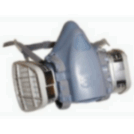 Sadly, this remains one of my most frequent complaints and questions. I found most paper masks protect us from being sprayed but they leak far too much for woodworking. I strongly recommend to those without beards the 3m model 7500 dual cartridge respirator masks. Since it comes in different sizes you should get one that fits your face comfortably with a good seal. I found the 3M model 7500 pictured on the left is the most affordable and best NIOSH approved respirator mask for most. It comes in different sizes for a proper tight fit and has removable filters that can also use the organic filters needed for many finishes, solvents and spraying operations including yard spraying. AO Safety Quick Latch Pro is another excellent NIOSH certified half mask respirator that also accepts the needed protective cartridges.
My air quality meter shows a 20" 3450 RPM fan blowing in a side door with the main door to my shop open a bit keeps the airborne dust down. My meter shows most typical two car garage sized shops take about twenty minutes of a strong fan exhausting to amply clear the airborne dust back to outdoor levels. Otherwise, even the cleanest looking shops with fine filters on their dust collectors and cyclones rapidly build such high levels of invisible residual dust that just walking around without doing any woodworking stirs up enough dust to fail an air quality test. With my liking to work woods known to be toxic and to rapidly create allergic reactions, this is why my respiratory doctor told me to wear my mask and use my exhaust fan whenever I make sawdust or paint then keep wearing the mask any time in my shop it is thoroughly cleaned out. -
I have a worsening allergy to some wood dusts but am not willing to quit my woodworking. What mask(s) do you personally use?
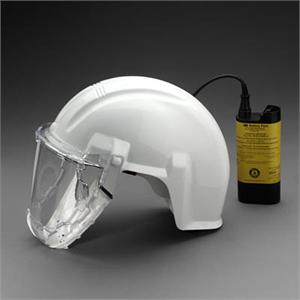
 The damage fine dust caused to my lungs left me under doctor's orders to wear a mask whenever I do or am around woodworking. I also have a beard. My beard hair is so light and thin that I get a pretty good seal with my 3M 7500 mask, but I actually prefer a powered air purifying respirators (PAPR) unit. These use a battery powered fan to filter the air and blow it into a sealed face shield which keeps that shield from fogging. My wood turner friends, aggressive carvers and those with beards that cause regular masks to leak almost all recommended the early Racal Airstream respirator masks. 3M bought and still produces these masks pictured on the right. Unfortunately, our small shop vendors now sell a couple of cheap knockoffs, that look similar but do not perform near as well and are not NIOSH certified. The specifications on these uncertified masks show they freely pass finer particles. Some are so bad I would never use them under any condition. Others have heavy batteries and other features that make them very uncomfortable to wear or use. I spent the small fortune required to have both a Racal mask and the more expensive 3M version of that early Racal mask upgraded so it also holds a welding face plate. Some have written that they like the Trent Airshield Pro pictured on the left, but when I checked these were not NIOSH certified.
-
Bill, I have a coarse beard and it leaks badly when I wear my 3M model 7500 dual cartridge respirator mask you recommend. I see you have a beard. Do you have this same problem and if so what do you recommend for me?
And yes, I have a beard and it does cause some leakage but probably not as much as most as my hair is very fine and most has already fallen through going from the top of my head and out my nose, hands, ears, etc. Seriously, I pull my mask extra tight whenever making just a little fine dust or doing a little painting or spraying. It still leaks more than I want, so when making more than a little fine dust or working with anything toxic, I end up wearing either my 3M or Racal Powered Air Purifying Respirator (PAPR). Both are near identical except my 3M also came with a second flip down welding mask visor option. Given Racal stopped making their units and the 3M are pretty pricey, for most I recommend that 3M 7500 unpowered respirator mask. Some say a little petroleum jelly will make a good seal if your beard is very heavy. That sounds too messy for me. Also, be careful what you buy has easy to find and affordable filters. I have a new off brand mask whose maker went under and you can no longer get its unique filters.
-
- Filters and Dust Bags
-
Bill, you have really confused me on the whole subject of filters. I read on your pages over and over that what is best is to either place and vent our dust collectors outside or blow the air from our cyclones directly outside. Then you go into great detail because your cyclone is the best to protect our expensive filters needed to amply protect our health. Please help with this confusion.
You are absolutely correct. Whenever possible I recommend placing our cyclones and dust collectors outside and venting outside. Small shop woodworkers face a triple threat. First, woodworking just makes far too much fine dust. Second, unless this dust gets wet it lasts forever and just about any airflow will launch this dust over and over. Third, most of our dust collection equipment does a poor job collecting and filtering the finest invisible dust. As a result, those with particle counters consistently find if we vent inside our shops quickly build up such dangerously high amounts of fine invisible dust, that just walking around without doing any woodworking launches enough fine dust airborne to fail EPA air quality tests. This is why I recommend venting outside and regularly cleaning out our shops after every dust making session. Please read over the Introduction for more information.
The second part of your question is simple. Independent medical school testing shows my scalable cyclone design separates six times more airborne dust than its closest competitor, which is the cyclone I previously designed. Airborne dust is what clogs our filters and kills their ability to pass air. Airborne dust particles have razor sharp edges and sharp barbed points that fill and clog our filters. Cleaning forces some of this embedded dust through our filters which cuts and tears the filter strands, so the more we clean our filters the sooner they wear out. Large woodworking facilities that use traditional cyclone separators to get rid of most of the heavier particles use particle counters that show they must replace their fine filters roughly every three months of full-time work. Those who upgrade to cyclones of my design find their particle counters let them go years before they have to change filters. My scalable cyclone design separates off most of the worst filter destroying airborne dust. -
I like to know more about the performance of different DC bags with regard to airflow and filtration.
My personal testing was done 1999 through 2003 and then there was not a single dust collector or cyclone filter bag I tested that was suitable for indoor use in spite of many advertised as 0.5 to 2-micron filters. Although I suspect some of the worst I identified earlier have improved, I still see nothing at all in the filter maker literature that says any dust collector or cyclone bags have good enough filtering or enough area in to safely use indoors. Yes, a finer bag will flow more air because the finer filter particles offer less resistance. Likewise, the finer filters will filter far more dust, but most freely pass almost all the PM 2.5 particles (particles 2.5-microns and smaller) close to 100% of the time. Do a Google search on "PM 2.5 health risks" to see over 53,000,000 references to explain why letting this stuff into your shop that can so easily spread into your home, particularly with indoor and basements shops is not a good idea. -
Bill, I am developing some dust allergies and my daughter who works with me in my basement shop now has developed full time allergies that get so bad in the shop she can only work for about twenty minutes before having to quit. I have a big brand name 2 hp dust collector, upgraded as you recommended long ago to all 6" duct, already fixed my tool hoods and ports, plus bought what is supposed to be the best quality bag filter available. None has helped either of us. We live in an area where our neighborhood rules preclude moving the dust collector outside. What do you recommend I do for filtering?
As discussed on my web pages I suspect you have a very clean looking shop because a 2 hp dust collector does an excellent job of "chip collection" and your fine filter bags will get rid of most visible dust and dust buildup overnight on your tools. At the same time based on your allergy symptoms you and your daughter are walking test gauges that prove your solution works poorly at getting the fine dust. In short, your 2 hp dust collector does not move ample air to collect the fine dust from your tools, plus your fine filters probably pass almost all of the finest unhealthiest dust known to cause the most long-term problems. Sadly, I get a few emails a day from people telling me exactly the same thing about building up dust sensitivity while using near identical dust collection systems and fine filter bags. These dust collectors with the fine filter bags just do not protect us from the finest unhealthiest dust.
Because basement shops tend to share air with our homes, we often end up with a 24 x 7 exposure, so you should get you, your daughter and any other family members with symptoms to a good doctor and probably allergist who can evaluate what is going on. If these allergies are wood dust triggered, and it sounds like they are based on your daughter's symptoms, then immediately stop all your woodworking and do a major shop and home cleanup. I'd recommend you wear a good dust mask like the 3M 7500, use a leaf blower, and use your dust collector blower with the output going into a big hose snaked outside instead of to your bag tree. Likewise change or replace your home filters to fine filters then clean or replace them right after your shop clean up.
In your situation I would recommend building or buying a cyclone kit of my design from my son with a couple of the big Wynn "nano" filters plus one a spare Wynn "nano" filter that you make into an air cleaner. The reason my cyclone design is important to you is because it separates off almost all of the finest dust providing far better protection for you and your family and gets rid of most of the dust that clogs and destroys fine filters. It is over 98% efficient at separating off the 30-micron and smaller particles, versus its nearest competitive cyclone at only 42%. This twenty-nine-fold reduction in fine dust makes for better health protection and much less filter cleaning and far longer life on these expensive filters. It sounds like your area will allow you to exhaust outside, so I would setup this system with a wye that can either filter or blow outside. I recommend you blow outside except in the most extreme weather. Remember when blowing outside you should provide makeup air and a carbon monoxide detector to ensure you don't suck deadly gas backward through any flues, vents, or chimneys. It sounds like you have already got the ducting, tool hoods, and tool ports covered so other than the time and expense to upgrade, this should work.
So to answer your question as to what I recommend for filtering for those who have allergies and still want to continue woodworking. You must have and use a good mask when making find dust. Likewise, you should build a plenum better known as a box where the air blows through your pair of the big 0.5-micron filters then out the box into a big HEPA filter. This is what I do. I had Rick Wynn with Wynn Environmental help me with sizing all and getting me the needed filters. He said this is the best way to go because our 0.5-micron filters will do a great job of protecting the HEPA filter allowing it to last nearly forever. -
I can see why two of the larger filters will reduce flow resistance by four-fold (double the area and half the velocity through that area), but why does it also increase filter life by four-fold?
What kills filters is dust loading and pressure. The reduced pressure does not force the high silica (glass) content in the fine dust to cut and tear it way through the filter pores as quickly plus the caking of this fine dust is much slower, thus the much longer filter life. -
When and how do I clean my filter bag?
Knowing when to clean your filter is mostly a matter of feel or buying an air gauge. If the flow is falling you need to clean. When to replace your filter is tougher. You have to monitor particulate count, pressure, or be conservative and do early filter replacement. With particle counters far too expensive for most, it comes down to buying a pressure gauge and carefully tracking the pressure or just regularly replacing filters. When the pressure starts dropping after each cleaning your filter is near if not already needing replaced.
Here is how to do that monitoring, at least what works for me. Put an air gauge on your system when you get new bags. For this to work you need a consistent situation. For those with ducting I suggest running with your two closest largest ducts open and all else closed. If you do not have ducting, then test with only a 10' length of flex hose connected. First record the pressure with no bag then with your bag. The difference is how much resistance your bag adds. Next record the pressure every time you clean your bag by either vacuuming or blowing it down. Don't use more than 40 PSI to clean your filters or you will kill them early. The pressure should rise rapidly for the first three cleanings then slowly rise for the next six or so. Then the pressure should stabilize after every cleaning. When the pressure fails below its normal after cleaning pressure, it needs attention. If you have a blended poly paper filter like most cartridges, you need to replace the filter. If you have an all-poly heavy filter bag or cartridge you need to run the filter through a washer and start over. If the pressure does not quickly build up to the same prior resistance levels, then that poly filter is probably shot and needs replaced. -
Why do you recommend cartridge filters instead of the much less expensive filter bags for dust collectors?
-
The main reason for going with a cartridge is they provide the finer filtering in a smaller package with the much larger surface area needed to protect your health.
-
Cartridge filters can also be configured in an easy to clean filter tree that does not give you the nasty dust bath you get every time you need to clean your filter bags.
-
Cartridge filters also have far less resistance and resistance and that resistance kills the blower performance you need to collect those fine particles at their source. A typical dust bag is a 20" diameter circle and roughly 24" in height. That gives about 1508 square inches of filtering area which is about 10.5 square feet. A small Torit compatible filter is 12.75" diameter and 26" to give 226 square feet of filtering area. A pair of these for me cut the backpressure down from over 2" to 0.25". A single 300 square foot cartridge typically has about 0.5" of resistance. I now use two of these and get less than 0.2" total resistance. These lower resistance levels translate to many hundred more CFM being available at my machines to collect the dust and having to empty or clean my filters about 1/20th as often. That's important to me because I need the airflow and know that cleaning rapidly wears out these expensive filters.
-
Sadly, I do not see small shop bag and cartridge filter makers getting NIOSH or ASHRAE certification to back their filtering claims. What I do see is firms presenting filtering numbers that are based upon collector bags being about three times more caked with dust than they can handle and still pass enough air for good collection. I suspect most would empty these bags before they got one-third that dirty. Highland Hardware is a longtime favorite because they tell things straight. I believe they and American Fabric Filter have some of the best bags, yet Highland sells their 0.1-micron filter bag, which I believe is one of the best, yet they admit right up front that it really is not that good in real use. If you carefully read their catalog advertisement, you will see that they think it is really only effective at 1/10th to 1/20th its actual rating. We will not know until the others submit to certified testing, but I will not buy the 3, 5 or even 10 micron rated bags for my own use. Before filtering claims can be believed you need to know at what CFM they are rated and what percentage of the claimed particles they capture at that CFM. If the firm cannot tell you that, then they probably should not get your business.
-
The solution is to go to NIOSH or ASHRAE approved cartridge filters. Most use a cyclone separator to protect these filters from material hits that will quickly ruin them from the chips poking holes in the filter material. The cyclones separate most of the dust so the filters do not clog too quickly. Cyclones take a lot of CFMs to operate as they do a lot of work spinning the air around to use centrifugal force to separate off the particles. Most small shop type cyclones need at least 3/4 HP additional capacity in your dust collector motor and a much bigger, more efficient impeller to power the cyclone, so if you are planning on eventually adding a cyclone, you should be looking at a 2 HP unit or larger. A few have made impeller changes and modifications to the 1.5 HP units, but the result ends up only being ample for a pretty small shop.
-
-
- Carving
-
Bill, I'm a power carver who has converted a room in my home to doing my woodworking. I mostly use sharp knives, but do my rough work with a rotary power carving machine. I also use a nice small long narrow belt sander. I'd like to get some dust collection because I am finding dust all over the house. My budget is limited to $200. What do you recommend?
Woodworking in a basement shop or spare bedroom in a home sealed against below zero temperatures is asking for trouble, particularly if you use any toxic woods or something like a power rasp or sander. I'd like to see you take the power carving and sanding out to your garage and just do the cutting type work inside. You should never work on toxic wood indoors. This would be the woods with two or more pluses indicated on my Wood Toxicity Table.
If you have to do these dustier tasks inside you really should get pretty serious about good fine dust collection and strongly consider building from my plans the portable cyclone. With your tight budget constraints, you can make your own or buy from Woodcraft a carving dust collector hood which will help considerably. These hoods mount a number of small electronics cooling fans behind a filter and surround that with plastic sides and top to pull in most of the fine dust that you make. I asked one of my carving friends how well it works and it says it misses the larger particles that get shot off by his Foredom power carver, but gets most of the fine dust.
I also recommend you buy and use a Fein Turbo III shop vacuum upgraded to a Sears red-line fine filter. This is the most powerful and quietest of the regular shop vacuums I've tested. I'd suggest you make a mini hood and use it attached to this vacuum plus that power carving dust collector.
Now is this going to do the job? Not entirely. That's why should also step up your filters in your home to the finest you can get plus use a good-sized air cleaner in your work area. I use a big Honeywell cleaner in my home with both activated charcoal and fine HEPA grade filter. Normal home air filters and the hanging shop air cleaners let the unhealthiest fine dust pass right through resulting in most woodworkers badly contaminating both their shops and attached homes.
-
- Metal Working
-
I am a metalworker and not a woodworker but I still feel that I have dust control issues in my basement workshop. I need to control the dirt generated by a Baldor 2-inch sander and a Baldor 1-inch belt sander. These are used mostly for metal but sometimes for other things too. I really don't think I need anything too fancy but I would like to get your opinion. I also have some grinders that can generate a lot of dirt. Do you think a simple bag type blower is adequate?
Similar to woodworking you have some of the same collection issues.-
To collect the dust you have to block, contain, direct and present the material for collection. I suspect that like most woodworking tools this will require you to remake your tool hoods to ensure doing the job.
-
You need to move ample airflow to collect the material and transport it through your ducting or hose. With woodworking lots of testing has shown that most wood dust is collected well by having an airspeed of 4000 feet per minute (FPM) being pulled by about 2" of pressure. Although we can transport the dust with about one third less airflow in horizontal ducting runs, vertical runs need close to that same airflow to keep from plugging. Because metal is heavier, it needs a higher airspeed to both collect and transport it in the ducts. The Cincinnati Fan Engineering Data PDF is one of the best and most concise discussions on material handling that I have found. It says you need 5000 FPM at 3" of pressure to amply collect and transport the metal debris.
In working metal, you also have a few more problems than woodworkers.
-
Metal can launch sparks that can burn for quite a while when fed by a powerful blower. To address this you should avoid typical woodworking cardboard dust bins, felt bin bags, and plastic bin bags. Instead use metal ducting and ensure you have a metal can for collecting the chips.
-
Many metals either contain or are coated with materials that when vaporized by sanding, grinding or heat are very unhealthy to breathe. That means you should always wear a good mask like the 3M 7500 with cartridges appropriate to what you are doing. I personally just bought a case of their high-end organic vapor cartridges plus HEPA grade pre-filters and only use that one setup for everything. The drawback is the activated charcoal requires storing my mask in a sealed plastic bag when not in use plus regular filter changing.
-
Since almost none of today's affordable dust collection systems have appropriate filters, you really need to exhaust the air from doing your metal collection outside.
In terms of what I would recommend, try and find a 55-gallon drum mounted 2 hp or larger dust collector that you can put outside. Cincinnati Fan, Grainger, and quite a few other firms make these kinds of units. A cyclone would also work well for you, but it costs about 50% more overhead to force the air to turn in the tight internal separation spiral, so you will need a 3 to 5 hp cyclone to get the same airflow you would get with a good 2 hp dust collector.
-
-



